
It is a triumph for any particular cause to find itself trending on Twitter. Usually it’s Justin Bieber, #howyouagangsta or a promoted blockbuster of some sort, but on july 26 freedom of information prevailed.
That day, it was the turn of Wikileaks, which released a highly anticipated report on the past 6 years of war in Afghanistan, releasing some 92,000 confidential embassy cable reports pertaining to the Allied Force’s conduct on the region. It has been said to be
.Julian Assange – the website’s founder and whistleblower paladin – had been threatening to open the US Army’s very own Pandora’s box since the video “Collateral Murder” was released on April 5. “There is more to come”, he specified. But what has been released so far has already caught a lot of attention.
The material was made public last night, as the traditional print media had already gone to press. Aside from the main news accomplices in this landmark delivery – namely The Guardian, The New York Times and Der Spiegel – the pulse was firstly recorded on Twitter.
It all started with
which was simultaneously joined by t(“Massive leak of secret files exposes truth of #Afghanistan occupation #warlogs“), along with that of the New York Times and Der Spiegel.According to Tweetminster, a website which focuses on tallying Twitter sentiments by tracking the volume of hash-tags and varying topics, there has been a dramatic increase in interest on Wikileaks (1,214 mentions as of midnight on July 27 – compare with 162 the day before.)
The #WarLogs hash tag also shot up on its first day, along with its associated terms: Afhganistan, leak, file, truth and occupation.
The general verdict, it is fair to say, is that the reception was extremely enthusiastic as the Twittersphere has deemed this event to be of historical relevance.
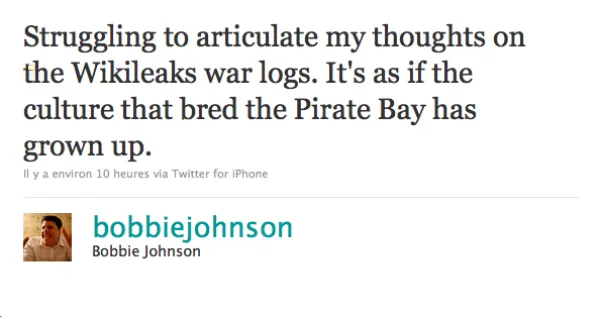
The Guardian’s technology correspondent Bobby Johnson has tweeted:
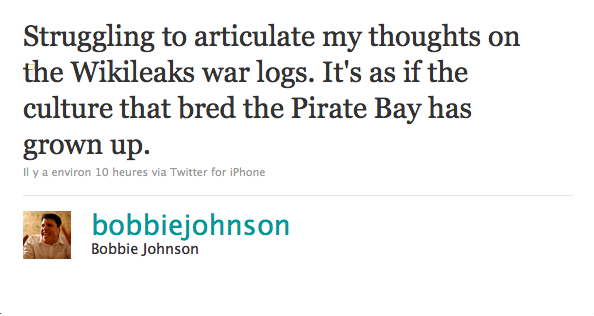
One would reach the conclusion in this case that the detractors don’t belong to the 2.0 sphere but to a more traditional realm. A number of them have blamed Julian Assange of jeopardising national security and the strategic success of the conflict in Afghanistan by releasing this information though the Pentagon has stated this is not true. T
that the “leaking of information” wast taken “very seriously”.Another success is the clear sparking of a debate, which picked up on shortly after the official announcement.
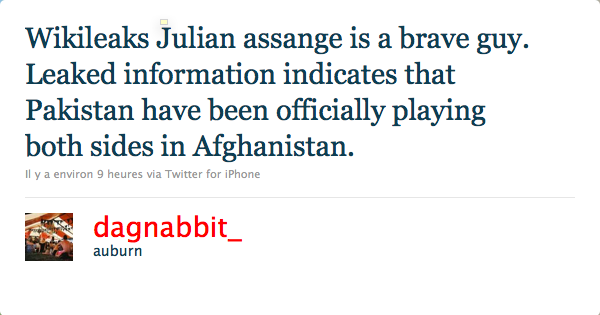
Another conclusion that one could draw is that the debate on Twitter – though staggeringly intense – is still inspired by traditional media. After all it was three traditional media outlets that first gained access to the material and allowed the microblogging site to discuss. Just like the old days, the old media is providing food for thought to the masses which have readily changed their diet and have learnt to digest it. Only difference being that the new kid on the block – Wikileaks – has unprecedented control over our “diet”.
💬 Discussion
No comments yet. Be the first to comment!