
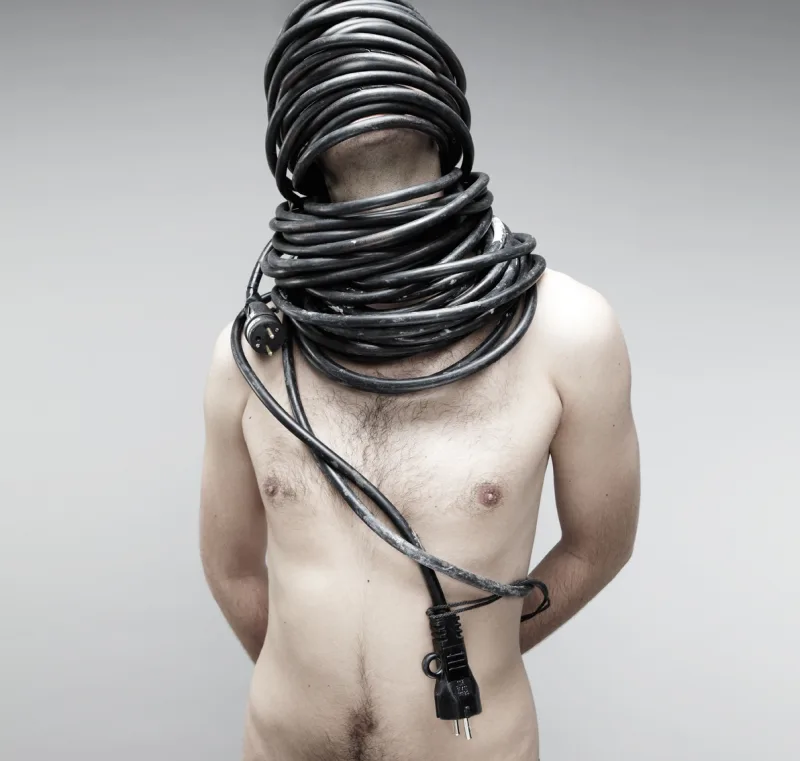
Imagine a world without aging, sickness, and even without shyness and anxiety. An era that would augment the capacities of our brains to process information, which is currently constrained to human limitations. This is the future predicted by the transhumanism movement, which is rooted in the belief that further evolution of the human species is possible through technology. According to Ray Kurzweil, inventor and co-founder of Singularity University [FR], we will soon be able to “transcend the biological limits of our bodies and brain.”
The concept of immortality is the tip of the iceberg. Dreams of achieving transhumanism affects one of the first conditions of being alive, as humanity itself is a “limited” condition. Yet this liberal concept questions the very nature of what makes us human and a part of this species: can we change what makes us human, or should we accept the framed perception in order to preserve the core of humanity?
A life expectancy of 1000 years?
In his book The Singularity is Near, Ray Kurzweil explains that “we are rapidly gaining knowledge and the tools for maintaining and expanding the “home” that we call the body and brain.” This sentiment echos that of another guru of this movement, Aubrey De Grey. The expansion of technologies is followed by bewildering affects on humans and has the potential to quickly and irreversibly preside over a new era of humanity. This shift is known as Singularity.
The average age of life expectancy is rapidly increasing, and that trend should continue with the steps of processing and engineering information underlying life and illnesses.
Robert Freitas believes that removing 50% of diseases from a list of preventable conditions, we can extend life expectancy beyond 150 years. By removing 90% of these diseases, life expectancy could surpass 500 years. If we were able to eliminate 99% of these illnesses, we could reach 1000 years.
According to Rémy Sussan [FR], journalist at InternetActu.net and author of the book Utopies posthumaines (Post human utopia), death is currently advertised as a “disease” which needs to disappear from our culture and allow life expectancy to reach infinity. This fundamental goal is on the “top 3 to-do list” for the transhumanism movement.
Some supporters strive to go further, seeking not just to tear down our finite walls of existence but also to reverse the effects. Ray Kurzweil is researching how to bring his father, who died at age 58 from a heart attack, back from the dead. From information on his father’s life, Kurzweil is creating the basis for artificial intelligence. (Excerpts from the documentary Transcendent Man were later adapted for Kurzweil’s book). Not only have we decided to fire the Grim Reaper, but we are making sure the door hits him on the way out.
The meaning of life
The agreement in creating artificial intelligence and a “back-up brain” is not unanimous. Rand Hindi, a bioinformatics specialist who went to Singularity University, claims it is not feasible to revive a deceased individual in their entirety:
Reviving a person’s intellect without reviving their body is impossible: part of the information that defines us passes through our body by interactions with the environment. By taking only the brain, it is theoretically possible to transmit only that information onto a computer.
But the entity lacks emotions and the capacity to marvel at the world. There is never the sensation of hunger, or agitation because it slept poorly. It can’t understand what it is to be human because there aren’t the necessary interactions with the environment.
What does is mean to be human? Besides overcoming death through the work of transhumanism, part of being alive is giving our life a distinct purpose. Without necessarily agreeing with Kurzweil’s theories, those who believe in the next step in humanity’s technological evolution over the biological can simultaneously believe in the imperfect state of man. Conditions are currently “limited’ and “unassisted” in both intellectual and emotional capacities. Will technologies fill this incompleteness that has plagued our species’ history?
By “transcending limits” and “enhancement,” an individual has not just the promise of a life free from a final destination, but also without boundaries that lock in the capacities of expression. Beyond the concept of this strange future and the delusions Kurzweil has to bring back his dead father, transhumanism negates the limitations of death and advocates for a repaired and improved life. In the Transhumanism Declaration, it affirms the desire to promote “wide personal choice over how they enable their lives.”
Raising this question of the extent of personal freedom poses several questions. The meaning of this “improvement” of human life is an obvious point, but also the major impacts choices of individuals could have on humanity. If technology permits the biological thresholds to be crossed, then would humanity become fragmented, multiplied, defiant of the environment as subservient to his eternal symmetry? With the constant exchange of mechanical devices for the natural organs, would the increased momentum for a technological body eventually have an aesthetic appeal?
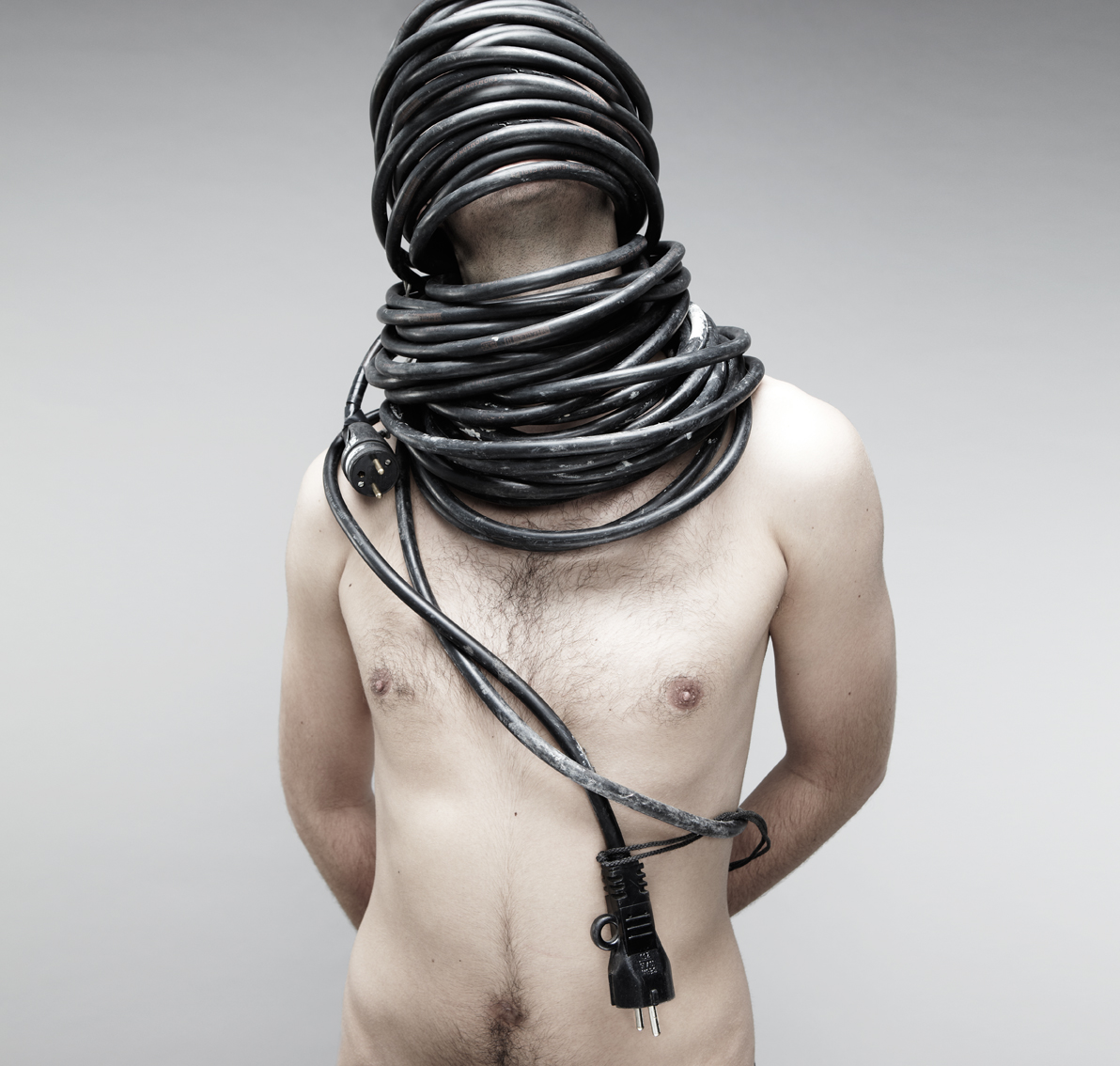
“We can not do whatever we want with people”
If we fret in anticipation about the consequences of such technology, it is impossible to fully view the situation. In fact, many European Ethics committees, such are the Irish Council of Bioethics, do not consider the concept of an enhanced body completely absurd. The Bioethics Council even published a pamphlet covering the nine significant questions relating to “human enhancement.”
Contacted by OWNI, Laurence Lwoff, Director of the Division of Bioethics and Secretary for the Bioethics Committee for the Council of Europe, clarified that transhumanism is not on Europe’s agenda. According to him, the committes’ work reflects “scientific developments” despite the final intentions. The questions posed by the movement, however, are based in the fact that nothing about these advancements are fictional. This is evident with the scientific capabilities concerning genetics, neuroscience, and preimplantation diagnosis.
If the idea of transhumanism was realized, the Council of Europe would have to seize the opportunity along with the “right to enhancement.” The Council would then have to decide exactly was constitutes human dignity and integrity; the very essence of humanity which the institution has vowed to protect:
The idea conveyed by supporters of transhumanism is that we can not prohibit an individual, that their actions are rights. For example, the speech by Julian Savulescu (The director of the Oxford Uehiro Centre for Practical Ethics) basically says that everyone wants to see the world’s population have a higher IQ. These assertions contradict the values of the European Council, which seeks to protect the dignity and integrity of humanity in face of what that implication implies. What does enhanced humanity mean? And where do we put the limitation?
Laurence Lwoff added that if technological innovations would destabilize the definition of humanity, there is a good chance the European Council would intervene with the force that represents the institution. Dolly, a sheep that was cloned in 1996, is proof of the European Council’s decisiveness when technology shakes the scientific community:
The dogma of human development has fallen and these new approaches are questioned. There was panic concerning the possibility of manipulating these methods, and reproductive cloning isn’t the only issue on the table. Within six months, a regulatory text was adopted as this case was earth-shattering for the European Council. This emergency did have one consensus: it is important to affirm a set of values.
Vincent Berger, Legal Adviser for the European Court of Human Rights, believes that the state is responsible for protecting the fundamental rights written in the European Convention on Human Rights. As such, it is likely that governments will intervene even if individuals consent to transhumanism methods. “We can not do whatever we want with people,” he adds.
An assertion that arises is the more one is convinced on the backlashes of this movement, the farther one goes to deconstruct his critics. Kurweil dedicates an entire chapter to this issues, called ” Not looking for confrontation.” Xavier de la Porte adds “They are sure what they predict will happen.” In their eyes, this contradiction arises from the misunderstanding of the shift towards a new era, a self-fulfilling prophecy which will apply to everyone. The approval of humanity doesn’t change anything.

–
Further reading:
- An autopsy of immortality
- Weaving the web of death
Illustrations CC: Marion Kotlarski, joamm tall
💬 Discussion
No comments yet. Be the first to comment!