
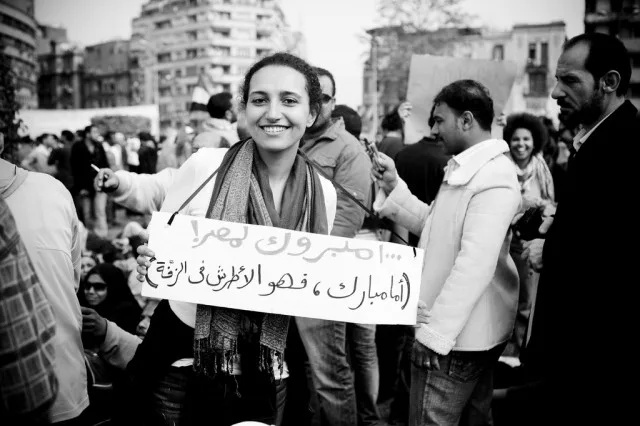
Basta Berlusconi !
On Sunday, February 13, thousands of Italians took to the streets to protest against their Prime Minister, whose male chauvinism reduces women to mere sex objects.
This demonstration challenged the conventional idea of the typical place in society for women. Inspired by Egyptian and Tunisian women’s cries of protest again Ben Ali and Mubarak respectively, Italian women are showing that these new political and social models are not just limited to Mediterranean soil. The movements that have shaken Tunisia, Egypt, Algeria, Jordan, and Yemen force the Western world to reflect on its preconceptions concerning the subjection of women in the Arab world.
Challenging male domination
Throughout history, wars, revolutions, and other crises have often reinforced male domination. The revolution which rattled the Atlantic two hundred years ago was largely driven by women who were deprived of their rights. They gained a little in the New World, but the glass ceiling was shortly re-installed after the first moments of hope and enthusiasm. For women, the American and French revolutions ended in disappointment.
Except for New Jersey, none of the new states in the US gave women the right to vote until 1807. The French revolution ended with the imposition of new barriers between the sexes. After July 1794, the model citizen whose voice was heard in the new society was the father and husband. In recent days, some Egyptians women are now paying heavy prices for their temporary freedom from social norms.
The Arab women’s movement seems to resemble a classic model. Similar to France in October of 1789, women in Maghreb mobilized against the price of bread. Further reminiscent of patriotic American women who joined the Revolutionary Army’s camps during the war of independence, women in Cairo act as nurses to heal the wounded in Tahrir Square.
In the eyes of men, these actions reinforce the stereotype that women of all countries are reduced to supporting roles and are associated with”eternal motherhood.”
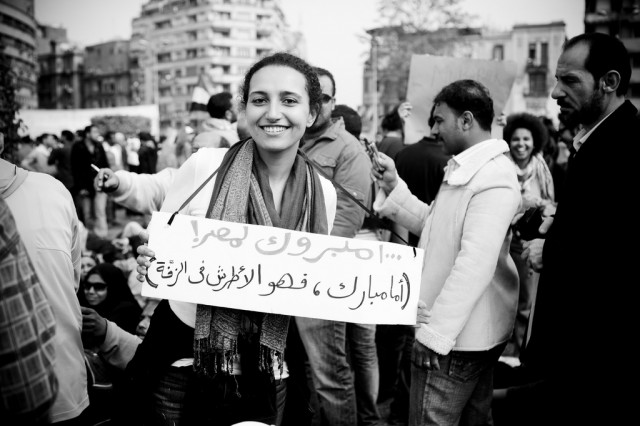
From this point of view, what is occurring in Tunisia and Egypt is radically different. Women who speak in the Arab world are still inferior to male domination, but they are also not the completely disenfranchised women of the 18th century. In result from the “first Egyptian revolution in 1919, Tunisian and Egyptian women’s status has improved slowly since the 1920s.
They are more literate that women during the Enlightenment period. They are educated on politics and are integrated into society. Many North African women participate in associations such as the Association for Democratic Women and Tunisia or are inspired by the avant-garde feminist like Nawal El Saadawi in Egypt. These women not only defend the rights they have gained, but also seize the opportunity to participate in civic and political debates.
Woman and Islam
Are these women the Trojan horses of Islam? This secular viewpoint helps to put the past and present into perspective, but may be inaccurate. At the end of the 18th century, deeply religious Catholic women held demonstrations not unlike veiled women, protesting in Tahrir Square. Certain women, who are very involved in religion and thus in social life, sometimes mobilize on behalf of their faith. Yet this does not imply they are systematically manipulated by “religious fanatics” – they do have their own political views.
As noted by the political science professor Olivier Roy [FR], the changing role of women in the “post-Islamic society” does not indicate the battle between secularism and fundamentalism has an obvious finale. Although thousands of Tunisian are fearful their rights will be jeopardized by the return of Islamic leader Ghannouchi, many of them also intend to exercise their new rights to freedom of expression without being subject to prejudice due to their wearing a veil.
The “Women of Cairo” are young and old, with hijabs and without. In a film released in 2010, Yousry Nasrallah describes the desires for freedom, which can not be understood under a Western lens. Yet, in appreciating the Islamic movement on its own merit, it is evident what mobilizes women towards modernity.
-
Initially published on the blog Les lumières du siècle with the title: Femmes du Caire
-
Photo credits: Flickr [cc-by-nc-sa] 3arabawy, enseignantes and jeune femme on Tahrir Square
Translation: Stefanie Chernow
💬 Discussion
No comments yet. Be the first to comment!