
Disclosure: The events mentioned in this post were hosted by the State Department, through a program called “Voluntary Visitor,” which I attended in early March in Washington, San Francisco and New York.
In early March, Secretary of State Hillary Clinton said to members of the Senate that the United States was “losing the information war.” Directly targeting U.S. networks, she accused them of broadcasting “a million commercials…and arguments between talking heads.” Conversely, Al-Jazeera delivers “real news” and is trying to “change minds and attitudes of people,” according to Hillary Clinton.
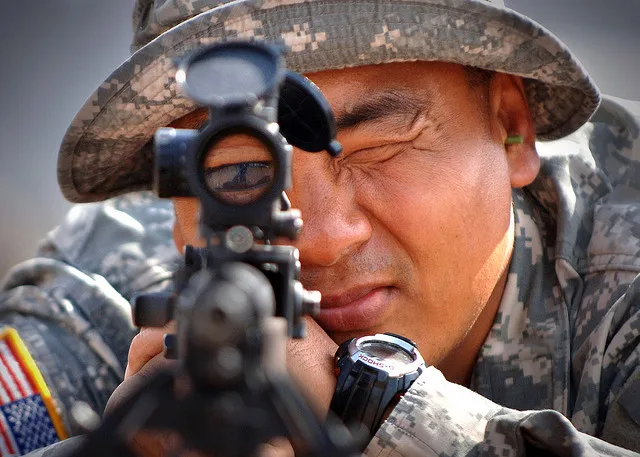
We.Are.At.War.
While this information battle is not new, the weapons have changed and conversations between interconnected individuals have shaken up the situation. Now everything is “social” – the media, justice, economics, religion, and of course politics. As Thomas Friedman of The New York Times puts it, “the world is flat.”
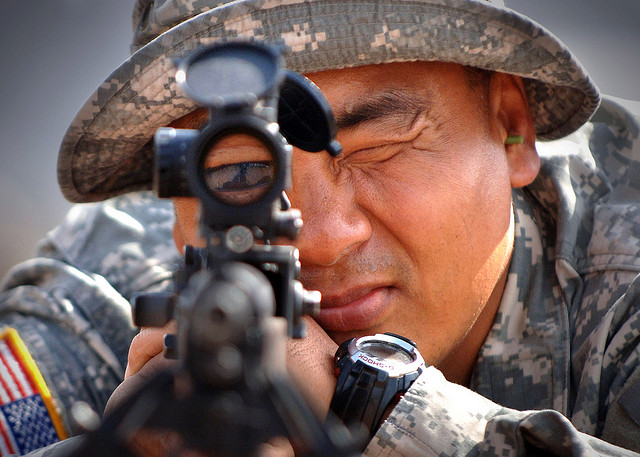
The bellicose words used by the U.S. Secretary of State are not trivial. Neither is the warning shot addressed to “its” media. Despite the difficulty, the Obama administration seems determined to win back the media battlefield which forged his election – after he won the presidency, his electronic grassroots movement failed to transfer into a governing tool.
Wikileaks has also forced spin doctors to accept the obvious: trying to control the flow of information on networks is far more costly and less effective than keeping them open and facilitating conversation. Essentially, this was already the ideology behind the 21st Century Statecraft’s assertion of digital freedom. It’s not free of ambiguities, but it hammers into society “what is good for business is good for the U.S” (Just like money, information generates surplus value only if it circulates).
Even if this freedom sometimes backfires…
“Occupy the ground” and focus attention
Within the Pentagon, the US Navy “Social Media” sector keeps three people busy, full time. Their job: to ensure that the official Facebook pages opened by various Marine Corps meet the government’s guidelines (published online in the form of comprehensive tutorials on Slideshare). It also runs the community for families of Marines deployed overseas, and interacts with Facebook and Twitter users by answering their questions and organizing meetings IRL (in real life).
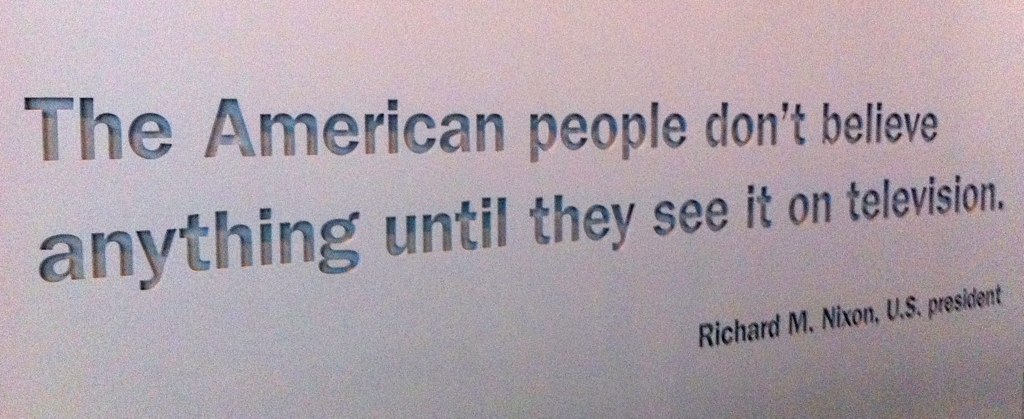
“Like everyone, we fumbled a while before finding a tone and an adequate degree of transparency,” said Capt. D.W., in charge of managing the official Twitter account of the Navy. “We know that people talk about us on the Internet, and not always in a positive light. The least we can do is show them that we are listening,” he says, convinced (like his superiors) that these online discussions can (re)create a climate of trust towards the army. A process enameled with failures and mistakes, but sustainable to allow for constant adjustments.
We do not interact on social networks to justify the choice of our superiors, but rather to facilitate understanding. And you can not do this if you’re not ready to hear the feedback from your users. In fact, we try to make ourselves particularly useful to those interested in our activities.
This is the opinion of the Director from the “Innovative Engagement” sector at the State Department. Hence the webcasts open to comments, deals with YouTube, and training seminars on collaborative work and management of online conversations.
But speaking publicly on the behalf of the Navy or the State Department is a balancing act between professionalism and transparency for the benefit of the institution. Some do cross the red line, and should face the consequences. The resignation of the State Department’s spokesman, P.J. Crowley, after he expressed publicly his concern about the conditions of detention of Bradley Manning is a perfect example.
“Occupy the ground” any cost, and prevent others with alternative agendas from taking the spotlight – This strategy now includes monitoring of some conversations on social networks, specifically in US counterterrorism departments…
Valuing users’ participation and creation
A few blocks away from the White House on the sixth floor of Al Jazeera’s headquarters, Stephen Phelps is putting the finishing touches on his “100% social” project (implemented with his technical team based in San Francisco).
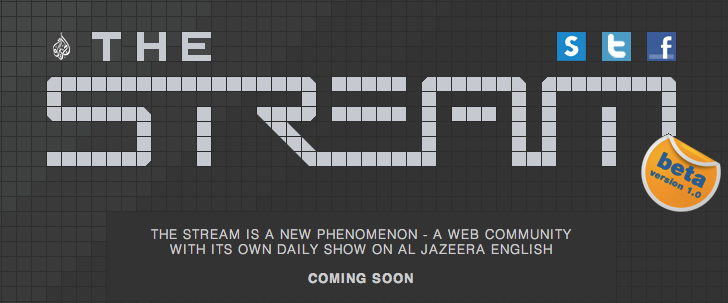
Al Jazeera, which does not broadcast in the USA (yet the English version is accessible online), is growing as a major news source. Its coverage of the events in Tunisia, Egypt, Libya, and general scoops throughout the Middle East used social networks as a primary source for breaking news. The new program “The Stream” which Stephen Phelps will launch in early May could create a larger gap between media that reaches its audience via online channels verses those who stubbornly stick to television.
Adel Isklandar, professor at the center of Arab Studies at the University of Georgetown and author of several books on Al-Jazeera, affirms that:
The 20 Egyptian PCs connected to the web demonstrated the growth that communities can develop when they focus on a common goal, along with their message being disseminated to a larger audience. The combination of these two factors led to the fall of Mubarak, and pulls on the regimes of surrounding dictators.
He also adds:
Why do you think Saudi Arabia is distributing billions of dollars, except to appease the communities which might endanger the “system?”
It’s in Al Jazeera’s strategic interest to continue to monitor the activities of online communities (via their Twitter dashboard) so they can stay one step ahead. Meanwhile, other media networks react after the fact, therefore with a time delay and lower quality information.
The web: a new game of Risk
Before the Internet, selection in journalism was more or less the result of the corroborating sources. With The Stream, it’s the Twitter and Facebook super-users that Al Jazeera intends to allure and retain in the long-run. By accepting that crowdsourced information is “real” journalism, Al Jazeera has no qualms with putting their users tweets on air and their videos on YouTube – and allowing information to reach its audience quicker, giving the media network an advantage over its USA competitors (Refer to this excellent paper[FR] on the American media by Alice Antheaume on Slate.fr). This multiplies the methods that the youth, armed with computers and smartphones, can act, react, and interact with news. It’s an unbeatable combination for sniffing out advertisers on and offline. Checkmate.
Neither Al Jazeera nor the US State Department can forecast the exact effects of these active social networks. Yet both are aware that peoples’ attention span has a limit, which intensifies the digital competition. Since the web sparked a new pattern in human behavior and media politics, it revealed that it’s no longer sufficient to be the one who shouts the loudest in order to be the best.
__
Photo Credits: Flickr CC MATEUS_27:24&25, US Army
💬 Discussion
No comments yet. Be the first to comment!