
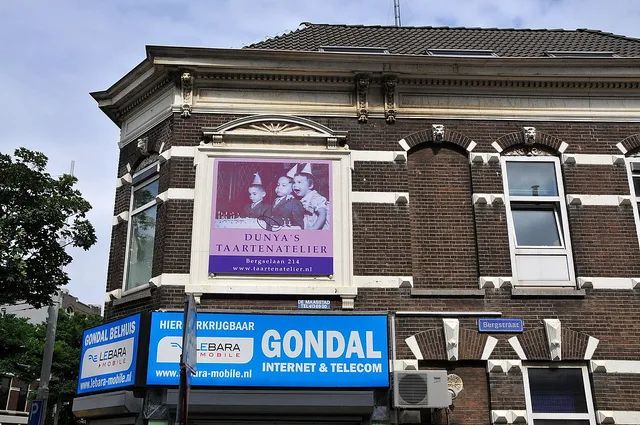
During the spring of 2010, Barbès, Belleville, La Chapelle (in Paris), Belsunce (in Marseilles) and other poor neighborhoods in France had significant makeovers: the windows of the cities’ worn-out payphone booths were plastered with blue stickers. At virtually each subway station, people in matching caps and vests were handing out brochures to those passing by, with the prices of telephone provider. This was nothing new, as France had already switched to the market’s first ethnic mobile virtual network operator (MVNO): Lebara Mobile.
371 million euros in 2009
Yoganathan Ratheesan, the CEO and founder of Lebara, modestly describes his strategy as an “extraordinary and irresistible force.” Established in London during 2001, the company soon after began its worldwide conquest of the telephone service market - ranging from Europe, Africa, and Asia. It also stomped on the hunting ground of its competitor Ortel.
The company’s business model: set the price at only a few pennies a minute and market aggressively in low income neighborhoods. Within these major cities leaflets are distributed by the locals: Sri Lankans working primarily at La Chapelle, Chinese at Belleville, etc. Benoit Chamoux, Lebara France’s Marketing Director, claims that roughly 15 nationalities are represented in the company’s 200 employees:
We strive to be as close as possible to where our customers live, their habits, and their patterns of consumptions.
After launching in six European countries and Australia, Lebara is opening up shop in France. In January 2010, the company announced 371 million euros in turnover for 2009 – a 105% annual increase for its 2.5 million customers. Since then, another million people adopted Lebara’s services, supporting the company’s performance and rending it self-financing: “We only have three founding shareholders, each contributing to our growth and reducing our costs,” says Chamoux.
We are in a system where a strong economy is correlated to scale – the more customers we have the more competitive we can be.
On the same level as Virgin Mobile?
From a technical point of view, Lebara used old techniques of other MVNOs (such as Virgin, NRJ, Crédit mutuel, etc.) yet added a secret weapon. Instead of purchasing minutes in the same country as its costumers like other phone companies, Lebara buys minutes in London where it has the capability to redirect the minutes in different directions.
In recent years, the brand became as powerful as Virgin in certain countries (notably in England). In addition to the operator’s street marketing, Lebara is also advertising in the sports domain and is a sponsor of the Cricket World Championship. Its name was even displayed behind the goal post of a match between France and England, alongside other well-known brand names in beers and electronics.
Yet the French market has proved more difficult to conquer. Connected to the Bouygues Telecom network, Lebara delayed its launch for years due to negotiations between the two different operators. “The proposed rates were not sustainable, but we were able to provided safeguards which allowed us to gain the trust of the operator,” says a representative from the MVNO. Bouygues declined to comment: “These discussions fall under business confidentiality.”
“Most MVNOs launching abroad are often profitable for network operators,” explains a representative from a competing firm. “Their traffic is calibrated on peak consumptions, so everything is sold at pure profit.” Yet Lebara doesn’t follow this trend – instead of using its low cost methods to charge the middle and upper class an expensive rate, it instead creates a much lower fee for those who can’t possibly afford the normal high price”.
Promotional fares during the revolutions
Within just one year, Lebara crept into cigarette shops as one of the major vendors of prepaid phone cards. There is “no number” on the sales, yet it’s interesting to consider that English operators have historically had relations with French partners such as SFR, Bouygues, and Orange.
The reason is simple for Benoit Chamoux, “We have a very industrial organization – at a technical, marketing, and commercial level…We apply the same recipe methodically. But ultimately, we are mainly in marketing and sales, and the technical infrastructure is in England.” Ortel’s attempt to resist its competitor has been in vain – the yellow banners that crossed the front windows of stores and taxi signs were soon consumed in a sea of blue stickers. According to the French headquarters in Levallois Perret, Lebara has about 100 people working on sales and marketing on the ground.
We hire locally in neighborhood using short term contracts – many of these people would not have work otherwise.
Since its arrival in France, Lebara has not tried to hide its interest in marketing to 5.7 million immigrants and foreign students, “One of the most promising markets in Europe” according to a competitor. Also, the company has tirelessly maintained the favor of its target communities: in certain neighborhoods in Lyon and Paris, it supports local associations by participating in cultural events. During the Arab revolutions and the African crises, the company even launched promotional fares. “A penny to call Algeria, Morocco, or the Ivory Coast will not create a large profit for us, but it is important for families to be in contact during these periods,” explains Benoit Chamoux.
Yet Lebara’s latest initiative might bring its business to a different level – after forming a partnership with MasterCard, the MVNO announced its intention to enter into the money transferring industry. It’s promising that the market is mainly dominated by Western Union, who made its own name by targeting communities with its multilingual tellers and posters. The British company is cautiously testing the waters of this new business, which could be another way to facilitate links between migrants and their country of origin – which are evidently low-cost links.
Photo Credits: FlickR CC Herederos de Rowan; FaceMePLS
Translation: Stefanie Chernow
💬 Discussion
No comments yet. Be the first to comment!