
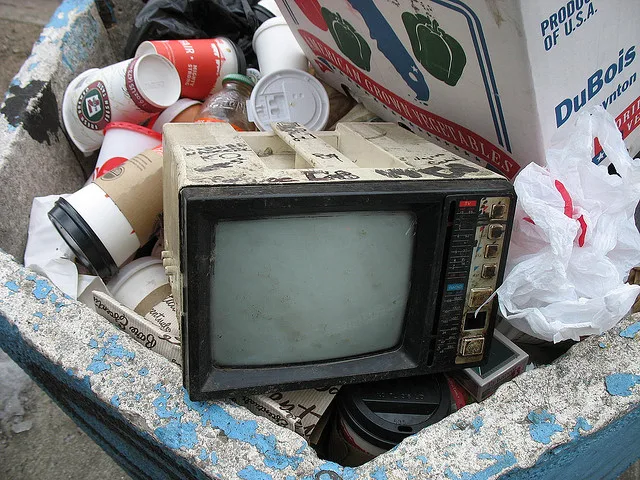
Essentially everything that is currently disrupting journalism today did not exist in 2000: high-speed Internet connections, blogs, podcasts, RSS feeds, Google News, Gmail, YouTube, Facebook, Twitter, iTunes, apps, flat screens, HD, 3D, WiFi, geotagging, metadata, iPods, mobile internet, smartphones, iPhones, BlackBerry phones, tablets, Andriods, iPad, e-books, streaming videos, etc…
Journalists in new media are facing a transformational crisis. It’s as significant as the invention of the telegraph in the nineteenth century, and is as groundbreaking as the invention of the printing press for the Catholic Church during the fifteenth century.
I say “It has been less than 10 years,” because the heart of the information revolution did not form in the mid-1990s with the advent of the Internet (which was too quickly branded as the new distribution medium comparable to Minitel). In reality, the new era emerged sometime between 2003 and 2004, when actors of economic, political, social, culture, and public domains realized that barriers to creation and distribution of content suddenly disappeared.
It is no longer necessary to be printed on paper to be read, to have a radio stations to be heard, nor to have a television channel to be seen. The collective and contributory 2.0 web replaced the more passive network. After the nascence of web publications, everyone can benefit from the social and informational stream on the Internet – where time is accelerated and space has contracted. Once information is aggregated it becomes fragmented and sorted, and tomorrow it will become personalized.
Will destabilized journalists still have a role in society? Probably not if they remain with the status quo. They are certainly reinventing their business by instilling themselves as the pertinent filters who are critical in an age of information overload.
The information revolution is the first true democratisation of public writing. Technological advances within the last decade promote services for self-publishing, and tools which are easy to use, cheap, and permanently connected (“always on!”). For traditional media, this takeover of production and distribution by the “social media” force has only accelerated now that the web works in real time. People are moving away from traditional media and more towards each other via exchanges on social networks (which is still largely in its infancy). Individuals can have their own publication (blogs), radio stations (podcasts), or TV network (YouTube). Everyone contributes to the larger bulletin board known as Facebook! Everyone shares what they know! Everyone is becoming the media!
It’s these new tools which nourish the global sharing of information and fuels the digital revolution. On the web, information flowing on networks (many to many) replaces the necessity for mass media (one to many). The process is no longer isolated and vertically-oriented, but rather horizontal and connected. Before, information worked from the top-down, from the mainstream media to individual homes. Now, information spreads among people connected to each other. This pervasive flow is moving faster and through methods that continue to diverge.
The public quickly learned how to navigate, explore, discover, reassemble and publish. Everyone is an editor! There has never been so many tools to access so many sources. Fifteen years ago, our world was brought to us through the media’s lens and journalists dictated to the masses their choice of content. This oligopoly expanded, as journalists are not the only creatures in the world reporting. They are no longer the only historian present as society evolves.
Alas, like other institutions which were exceeded during the 20th century, the media industry is struggling to reinvent itself. Similar to the Renaissance, a period of questioning has pushed out the media’s period of reverence.
Yet everyone realizes it’s impossible to go back, and the future requires a new approach. Everyone knows the future is arriving faster than expected, and it will not resemble the pre-Internet, Web 2.0, and economic crisis eras.
Our world changed, and it continues to change rapidly: the Internet is encompassing more significant elements of our business and personal lives, leading us to spend more time with a screen than paper. There is an extraordinary success for applications which are easy to use (think iPhones), making web navigators themselves outdated.

It is absolutely critical we reinvent our business in a radically new way. We must start by admitting the extent of changes needed in production, distribution and consumption of information. Everything at the heart of journalism relies on this.
The 10 essential points for the information revolution
1. Traditional media’s economic value is collapsing under the new mannerisms of a connected society. It’s in turmoil as it’s faced with new digital technologies, which include lowering the distribution cost significantly. Yet the metamorphosis is not just technical, but rather the nature of society is changing. They use information differently, and “on-the-go” throughout the day from multiple sources. Access to information, editorial enrichment and technology seems more important than content. Technology is inescapable in our daily lives at home, work, in the streets and on vacation.
2. Abundance replaces scarcity: From a mere few newspapers and TV stations, information has become decentralized thereby flooding us. It’s often free and digitalized, which is linked to the explosion of content creation and sharing. The amount of information and the number of transmitters exploded. Information’s abundance coupled with its pervasiveness and instantaneous nature on the web reduced its value, even though the demand for information has never been higher. In the digital revolution, the media industry (music, newspapers, and books) is losing ground faster than the rest of the economy.
3. Time is money: The press’ adversary is not the Internet, rather that time is not available as content is fragmented and proliferated throughout the day, yielding only to the consumers’ demands. The good news is the public is now spending more time consuming information – but everything still tends to move extremely fast!
4. An economy of demand replaces the logic of supply (pull vs. push). The niche markets and services demanded by the audience (Anywhere, anytime, anyhow) replaces the predetermined packages of information made by the media. Prime time is now “My time, all the time!” Customization is required, making the à la carte menu more prominent than the three course menu. Technology enhances the number of choices, but decreases the chances of randomly learning new information – increasing the danger of people focusing on familiar topics.
5. News coverage is losing its social value (mistrust vs. trust): Like other institutions with relative authority, the power of journalists and the media to influence is increasingly becoming challenged. Information is no longer solely determined by the media’s agenda – an editorial in Le Monde or Liberation has less influence today than it did 20, 10, or even 5 years ago. The digital generation prefers to trust the consensus of their networks’ recommendations, or the experts of their choice.
6. New technologies widen the generation gap in society, which translates to cultural issues within media companies. For the first time in the media industry, the younger generation does not consume as much old media. The reverse for the older generation is true (read: Facebook). In this new world, to ignore is to risk your own career. Innovation is the only life insurance.
7. The Internet is the new overarching media of the 21st century: The media, informatics and telecommunications are merging at an extremely fast rate though the growth of bandwidth, powerful mobile tools, and easy-to-use platforms. Content is no more than “bytes” that circulate on networks. Newspapers are making videos, TV stations write articles, and radio stations publish photos on their websites! All traditional domains overlap. The Internet makes information pervasive thanks to smartphones and tablets.
8. Open vs. Closed: The logic that controls “closed” (Apple and its applications, Facebook, mobile service providers) opposes the movements for collaboration, interaction, and contribution (Google, open source) … and also the spirit of getting information for free.
9. Competition is not as much from peers in the industry, but rather from new players and smaller units which are very flexible and often undetectable but can quickly become a major contender (How did Google become the leader in the global media industry?). Many smaller news sites are able to do more with less resources, breaking down the wall between them and traditional mass media.
10. The destruction of journalism’s values is not controlled – business models are in pieces, leaving room for new players to take over and sometimes dominate. The old world’s equilibrium points are disappearing faster than new ones appear (there is still no strong online business model). Yet the public’s ability to produce content is real (knowledge, sharing, diverse specialized sources), and the door for creativity is wide open.
Traditional media did not include an economic model
Traditional media still employs the majority of journalists, yet the main problem is finding revenue. The changing audience at least is predictable in moving towards the Internet, whereas advertisers have not followed newspapers to their online platform. Unfortunately as the global audience merged together, newspapers started to sink due to their diminished voice in market.
The transitional and experimental phase drags on. The foundation of monetization remains to be found, making it finally sustainable to finance hundreds of employees.
In recent years, pessimism in journalism concerning the future has taken a new twist: their concern of learning to leverage new technology has shifted to a second priority – behind those related to economic survival.
Editors in developed countries lost tens of thousands of journalists – on average a quarter to a third of their workforce since 2000. This significantly weakens traditional media’s ability to fulfill their mission to provide investigative journalism. Their power, influence, and authority declined.
In 2007, even before the economic crisis, the annual convention for editors in North America was titled “Journalism in a Time of Cholera.”
“The word ‘revolution’ is ringing in my head…Our lives are during a revolution that threatens our newspapers, our business, and our journalists…Revolutions are chaotic, shatter lives, and are violent,” affirms Charlotte Hall, the president of the Orlando Sentinel.
Yet traditional media is not often innovative, and still continues to offer the same products. The media tycoon Rupert Murdoch stands in his fortress built around content. He leads the fight against Google who is accused of swiping the transition to the digital – a symbol of the new world yet so devastating for older models, but rich in possibilities, discoveries, knowledge, and sharing.
“Journalism, skeptical of the profitability from new technologies, allowed others to steal the opportunities online,” lamented Pew Research Center’s Project for Excellence in Journalism in 2009. Yet the revenue stream is still nonexistent – far from it. Fifteen years after the Internet entered into the media’s world, the web still only accounts for 10 – 15% of newspaper’s revenue – which is not enough to fund a newsroom. In both Europe and the US, no one has figured out how to quickly monetize the web. The goal of reaching at least 25% of the previous revenue remains unattainable. Only a few niche sites have survived this revolution.
The “fundamental” economics are more unbalanced than ever: revenues fell due to a drop in circulation and the disinterest of advertisers to pay for a space in the paper. This is all considering that the media is now subjected to new constraints: speed, unlimited access, interactions, and short attention spans of a continuously connected public.
The mainstream media is caught in rivalries between a million individual actors. Opponents’ networks are increasingly personalized and are becoming giant resources aiming to take advantage of the public’s appetite for information – Google, Microsoft, Yahoo, Orange, and AOL want to be the mass social media.
The only rule in the game is attention: money follows where the focus is, but this takes time. Maybe one day advertising fees may be functional again, and services and valuable content impossible to copy.
Tradition is not a viable economic model – the battle for tomorrow’s business model is just beginning. For those who are today out of breath and no longer able to capture the public of the 21st century, will they be able to survive this transitional period?
Everyone is taken up in the tidal wave of the technology revolution and the “uber-connected” audience. It’s clear that constant change is the norm in these uncharted waters.
Information is now a banal commodity, like water or the air we breathe. To get through this transitional period which lacks a compelling business model, we need to remember why more and more voices (particularly overseas) composing independent information is a “public good” in line with the values of democracy, and emphasizes that its collection and distribution can be organized in the “non-profit” category.

The Internet and digital systems are the largest distributor of original content. Google predicts that in a few years there will be no distinction between TV, radio, and the web – and therefore nothing to differentiate the media and stop newspapers and magazines from posting videos. Already, professionals do not use the term “TV,” but “videos.” Television will soon fall to the same circumstances which brought music, newspapers, and music to its knees.
At the same time these new infrastructures are forming, it’s also increasing the volume of information. The speed of movement is accelerated, and its lifespan is also reduced due to a social and instantaneous Internet – where people are spending more of their time.
The Internet follows us everywhere, it’s not just left behind when we leave our homes. Mobile Internet will soon surpass a fixed Internet connection – it has already been adopted by the public eight times faster. Everything we did at home or the office is now on the move. In the streets, people don’t just “talk to themselves,” but walk leaning forward, head down fixed on their Blackberry or iPhone’s screen. In coffee shops more laptops are open, and tablets are scattered throughout the passengers on airplanes. Soon everyone will have one. Videos are consumed everywhere via smartphones and color e-readers.
With touch screens, iPhone and tablet applications, the web is not just a place for publication – It’s where we live, an environment which is always around us. For those between 17-34 years-old, the primary screen is on a smartphone – not the computer or even the television.
DVDs are obsolete, CDs dismissed by teenagers. Now everything is downloaded – and even digital files are ancient in face of streaming. A mobile phone is no longer a simple device, but rather an extension of our personalities (with a much better memory!). The smart phone is the center of our digital lives. Google mastered the near instantaneous digital translation along with direct telephone calls. 3D is on televisions connected to the Internet, and it will soon be on our mobile devices.
Yes, the Web, characterized by a connected world, is different. And we are only in its naissance! It’s not an expected miracle nor a panacea for the media’s shortcomings, and it’s especially not a single distribution channel for increased content of the past.
It’s a global and decentralized mechanism, which allow more than one billion people to connect, communicate, share, contribute, and be informed. It became a technical crutch as information today is not worth much without it. Content is broken and authors are isolated – they will probably try to regroup by their affinities in the post-traditional media era.
It’s the era of the “generation M”: the millennial of mobile, multitaskers and multimedia, born after the fall of the Berlin Wall. A generation that traded time in front of the television and advertisements in favor for time dedicated to expression and relationships on social networks – and who no longer use outdated email.
These “mutants” grew up without relying on newspapers or televisions. Traditional media does not realize the sociological and technological changes associated with this new independence – or refuses to see it. They are no longer the only windows to the world! We are connected to countless sources of information, which would have been unimaginable 15 years ago. The news is not the only thing that connects our society. Major newspapers no longer decide what to think, nor set the agenda for political, economic, and social discussions.
A revolution for the public, by the young
More than 600 million people in the world have a Facebook page, and more than 4 billion photos are posted on Flickr. Twitter is now worth more than a billion dollars. Social media is not just a passing fad, simply because this revolution has public support. This support is a major asset because it proves the appetite for information and knowledge is enormous. Web audiences – including news sites – are increasing.
The revolution experienced by traditional media and journalists is linked to the arrival of new technologies, and thus the new methods of use on the Internet carries are significant. Newspapers hadn’t changed for over two hundred years! New technologies led to a profound change in “media relations,” “The media experience,” and above all a very different way which the younger audiences consume media inquires.
The youth are structured around the Internet, video games, and virtual networks. In this digital universe, the social space is not controlled, resulting in significant consequences for behaviors and practices – which may be under-appreciated by their elders.
In modern times, the video game industry surpasses the film and music industries! It’s a non-linear remixed world dominated by pixels and images. It’s pushed by content farms where the “clouds” orbit around stateless data, where mobile information becomes an addictive service.
It’s a world dizzy with its own habits, where a collective intelligence has emerged with the assistance of millions of people – equipped with search engines for easy access. A new (wireless!) world.
The web has been in existence for nearly twenty years; an entire generation grew up with the Internet. Yet at its birth we never read, wrote, and exchanged with such ease! The web is not a vast library of statistical information created by professionals (like it was at the beginning). It’s a network formed around exchanges, a global communication platform open to everyone.
It’s a world of (free) comforts and plenty of information, where the artificial scarcity of content did not transfer from previous times. Today, information is the only commodity that is growing exponentially, ten times faster than any other industry or manufactured good! True, this statistic includes poor content, rumors, and trashy material. Yet at the same time there is also a huge growth in expertise available, giving way to a knowledge base which is rich and diverse.

The second wave of the Web revolutionized how we communicate (Twitter), consume media (YouTube, Flickr), and even how we build relationships (Facebook). The significance of these changes lie in our “media snacking,” or how we consume media throughout the day. This privileged “on demand” generation has VOD, catch-up TV, and social networks which makes it too easy to access information on entertainment, sports, culture, and knowledge. Access is equally - if not more – important than content.
Today, a computer is not just a simple box – it’s a door which opens to the rest of the world, a bridge that isn’t just necessary for work but for our home lives as well.
The youth (who do not consider content from traditional media to necessarily be the most relevant) dictate online behavioral trends. This is likely to continue, because they simply have more free time. Yet they aren’t willing to pay, at least not in the near future. This is more true in France than the rest of Europe.
They have access to important information which often is fragmented through novel methods of online sharing and is increasingly mobile. The print media no longer satisfies their needs. Demanding creativity, they prefer images and are visually socialized for the Internet.
The “screen culture” is permanently imposed on our daily lives, permitted by advances in broadband, democratization of production tools, passion for expression, and cheap prices for storage – the Internet, the heart of it all, is everywhere.
Digitisation, personalization, mobility, and a permanent connection to the Internet (and thus the rest of the world) are the new ways we can inform ourselves at any time – either at home, in our cars, and at work.
New media is the social change in journalism. Tunisia played the censorship card to give their cause an additional resonance of repression and revolution.
The good news is the public has never consumed as much information. According to a study by Pew in 2010, Americans spend about 70 minutes a day consuming either old or new media.
The new challenge for journalists
The crisis for content industry (music, newspapers, books, television) is occurring simultaneously with the explosion of the social web, which creates content outside the professional sphere. This leads to a great deal of tension among journalists (whose degree’s worth is declining), as they caught in technological changes, new usages, and an economic depression.
Media as an institution is shocked by its weakened authority and influence, victimized by the desecration of information and is lost in the digital noise. It’s faced with a revolution on all fronts: the upheaval of information production, distribution, and consumption. It appears like professional journalism is attacked on all sides – and seems less necessary and useful.
…However!
Yet the solution to the “information overload” that overwhelms us daily is journalism! Bear in mind the answer is a new form of journalism – an “augmented journalism,” enriched with new possibilities of the digital age. Journalism with added value, which mainly exists on digital platforms but can be transferred to others as well. The transformational crisis will sweep away those do not have any added value services to offer the public. Those who do survive will offer individuals and communities a better way to understand and participate in civic life, along with enrichment and simplification of people lives.
Journalism is not a zero-sum game
Journalists can no longer be ignored. They are the vehicles of serious information, neither the amateur nor the expert, who now carries an essential mission – collecting, analysing, commenting, and investigating. Augmented journalism is about enriching the audience, creating a more democratic system incorporating the public’s production. Our tools are in the hands of everyone – take advantage of this! The public cannot replace journalists nor the work they do – but journalism is also not a zero-sum game. The new public participation will not enrich journalism on its own, but rather it complements augmented journalism structured around social ties.
The WikiLeaks phenomenon shook the digital age in 2010: a stateless and decentralized NGO without a clear agenda began publishing military and diplomatic secrets, which provided newspapers nearly unlimited content concerning the US administration.
Is this journalism? Is it good for democracy and the public’s interests? It seems the response is affirmative. While traditional journalists can’t fulfill their missions (due to lack of resources or public confidence), sources will increasingly entrust their information to whistle-blowing websites, guaranteeing them both a strong voice and anonymity.
We’ll have to adapt and leverage this collaborative force of expression, interaction, participation, and sharing. The Internet is a wonderful opportunity for journalists to become professional mediators as they best leverage public relations, links beyond borders, sharing of information, collaborations, and collective actions.
A one of a kind profession
Yet there remain the skills and expertise innate to the journalism field, which society needs more than ever – the ability to sort, authenticate, quickly integrate information and give it a meaning in relation to events.
In a digital world always on the move, media is fragmented, information is vast, and old media is declining. The new challenge is to develop a “filter function” with the assistance of new tools to deliver news to fit the demands of the public. While the appetite for information has never been greater, the public’s ability to absorb everything does not follow.
Journalism: filtering and ordering the chaos!
The greatest enemy to traditional media is not the Internet, but the public’s available time. There isn’t a content shortage – quite the opposite – but just a lack of time, leading to critical constraints around quality filtering. Faced with vast information along with the exponential growth of solicitations and stimuli throughout the day, attention is the scarcest commodity. Journalists must find the important signal in the clutter and save time for people.
The conventional wisdom is “On the Internet, everything is free!” Wrong! People pay with their time in consuming content, and this is exactly was advertisers are ready to buy.
The way in which the public consumes information varies. They chase, collect, and/or peck at what they want. Once they’ve found their treasure, they share their findings on social networks. It’s our media snacking which creates this threatening information overload! The journalist’s expertise (and necessary confidence) can greatly help in sorting through the vast information. While the public is accustomed to content for free, would they pay to have “less” information?

Verification is increasingly indispensable
Along side the wonderful news that there has already been such an intense appetite for information, it’s even better that the web offers all the space necessary – without time constraints - to run this information machine. The public adds to this vast amount of information everyday. Yet they are also on a quest for makers of quality information. The Web is still the wild west of information! The verification and labeling mission and tracking information is a key function developed by professional journalists – which is even more critical considering other partisan and non-transparent entities also want to control the Internet’s editorial direction.
This function can also rest upon the reputation (justified or not), reliability, and the professionalism of the media organization where the journalists work. The most professional organizations are marked by where the most critical noise is – the real beacon of information for the public. They lead the field (sometimes at their own risk) in validating and authenticating information, which is rarely verified by non-professionals such as bloggers and commentators.
In the media’s rapidly changing world which is facing unpreceded and difficult challenges, having a negative vantage point is often the default when analyzing the long and short-term impacts. Remember, there is life after paper and radio! In an ocean of information, innovation, and digital networks, some remnants of hope need to remain visible to identify a clear path.
Reputation is one of the most identifiable markers on this new path. It’s a rare asset which must be protected, cherished, and monetized. In this business, a strong reputation is driven by the quality of independent information under the scrutiny of professional editors. Alas, today there is pressure to do more with fewer journalists under the pretext that economic models do not work in the digital age. Yet content’s quality is more than ever a condition of survival.
Enriched context
Journalists’ new added-value will also provide for fast context, which is crucial for addressing the overflow of information in an increasingly complex world. A mere dissemination of the “facts” is not enough.
In a given context, journalists will put the situation into perspective through their explanation, analysis, and cultural viewpoint. They will quickly give meaning to information and connect issues and the historical context – resulting in reduced noise.
New possibilities in how context is perceived is offered by new technologies: metadata, links between content and external enhancement, GPS for localising, bar-codes, electronic dialogs, community organization, content aggregators, data visualization, enrichment by other media, etc. The strength of the Internet and multimedia tools is it offers coverage and information processing which is richer and more dynamic. Instead of a static page, there are windows mounted throughout the universe.
Innovative journalism and a new digital narrative
Without wanting to advocate for a new breed of “journo-geek,” let’s be thankful for the emergence of the plethora of opportunities. The digital narrative allows us to better comprehend world events (global warming, migration issues, the economic crisis) through graphics, enrichment of experts and victims’ testimonies, conversations taking place over various locations, and collaboration with other media. These multiple interconnections and broad guidelines render the process more proactive. Data journalism permits for visual information to be transformed into knowledge, and knowledge constitutes an enormous developmental potential. This does not even include the imminent changes from “augmented reality” and how that will enrich information.
The Internet and social media are reinventing journalism. Due to pressures from this unstable phenomenon, editors are starting to use new tools born from this technological breakthrough. In short, the pen is finished! Instead journalists are trading old tools for devices that record and take pictures. The Internet has a need for sounds, images, animations, databases, etc. The new journalism is a 24/7 interactive platform.
Old methods of producing information have lived their time. New forms of media are already becoming widespread throughout the world, allowing content to migrate fluidly. This is true in both in different mediums (text, photos, videos, sound) and different channels (paper, PC, TV, and mobility).
When video imposed itself into the newsroom, journalism became increasingly more visual (infographics, applications, flash, visualization of databases). Yet with new web tools, the media transmits stories differently. A mobile phone is a pocket-sized newsroom!
Yet journalism must deal with the very short life span of new media technologies. It’s as if newspapers had to change the way they print every six months! It’s vital to adapt to the new means of consumption by the user, such as “on demand” via VOD for television and podcasts for radio.
Training is required, a flair for entrepreneurship recommended
Yet it doesn’t seem like the media has taken the web seriously: when noticing the slow investments in new media, limited number of Internet essays, poverty of web innovations, weak training of staff in these new tools, digital illiteracy, lack of integration of new tools that collects and integrates the users.
This revolution requires new skills for disoriented journalists.
Already, digital publications are usually created by the initiatives of individual seasoned reporters – who’ve returned to compete with their former employers.
An increasing number of journalists are developing their own brand alone or in small groups on the web. Quality journalism is no longer reserved for large media groups. New actors enter the business with such ease and enthusiasm, creating new grammar for the media, new exchanges, and traffic for tomorrow’s information. They often do so for free – because media on the web is exciting and there are opportunities for growth!
How to remain relevant?
We are seeing the end of certain forms of media. Are we seeing the end of journalism? Will it be able to stand in the field and reveal the hidden side of reality, connect seemingly unrelated facts, investigate abuse, greed, unkept promises, and take the precious time required for reflection?
The pessimist will complain that there is no longer an audience for quality journalism, and the “coverage of the people” will prevail. We need to believe the opposite – the audience for quality and intellect is growing. Yet we must accept to be apart of another revolution driven by relevance.
The media often forgets we need to produce content relevant to the society of the 21st century. And not produce more.
The success of social media can be explained by the need to share knowledge and discoveries. The world is a giant campfire, with people gathered regularly to discuss topics of interest with the people who matter to us most. It’s part of the “mix” of information which we consume everyday. It’s a real change that upsets the media, communication, and advertising’s landscape.
The influential power of social media is growing and represents a growing portion of Internet traffic (and is the main growth of the Internet itself). How it will affect journalism is still unclear, and how to monetize this process is even more foggy.
The present and future no longer fit past molds! One of the major challenges for journalists is they need to accept some loss of control and authority and engage more with the audience – because information travels with or without them. There is absolutely no question on reusing the same old products. Today, people buy newspapers for the practical uses of paper, not for the news! Television in its linear format is near its end. The youth do not consume background noise when they can have “on demand.”
Substance and form
Like it or not, the quality of access and the user experience often take precedence over content. Soon, information will be delivered based on where we are, and will be associated with the discussions we have with our friends. Attending to the format is a ticket to winning the race for the public’s attention.
The new world of abundance, chaos, complexity, and connected social media will continue to fracture and transform itself along the digital path. We are only in the beginning phases of this transformation in information’s consumption. It’s a new world where media companies are challenged in trying to offer products and services to a public that grew up with Google. Printing and physical distributions can’t possibly compete with data flowing instantaneously via Internet connections.
Only one thing is clear: the media landscape is turning digital – the rest is more opaque. It’s a world of uncertainty, confusion, and destruction of values. It’s difficult to understand the progress of our evolution when we have been living in uncharted territories for so long. It’s a world where media executives do not like constantly telling their staff “there is a lot of fog and we do not know exactly where to go.”
Just hope that the alternatives we are facing now do not amount to the sad choice between producing low cost and premium content which responds to the trivial segment of the market: only the popular content, young and elitist.
The standing challenge is the disappearance of a certain institutional journalism and finding relevance in a society overwhelmed with information. The challenge is to save journalism – necessary for democracy. Yet this does not mean saving old media.
So, do we still need journalists?
Yes, but not in the same way!
Journalists’ fundamental assets are more relevant than ever: quality writing, reporting and listening with an open mind, an appetite for investigation, ethics, and critical thinking. Yet these alone are no longer sufficient. Expertise, transparency, humility and credibility to regain confidence also need to be added to the list.
Journalism has contracted as its share in the daily consumption of information decreased. Its representatives are no longer the only ones guarding the sacred temple of information, the ones towards the path of general knowledge for the public. They are not the only ones who can engage the public, nor the only ones with access to publish information.
Today, information is in the beginning of a conversation which is fixed in an element of authority – yet the filter’s seal is composed of inconsistent authority.
Journalism can rise again. Its power will be less about the production of specific information, rather it will filter the tsunami of the world’s information. There will be more emphasis in sorting, selecting, editing, aggregating, and linking elements between events, ideas, and people. Those at the top will provide the best information at the right time to those who need it. We are betting there will be an augmented journalism that is more transparent and humble in its practices, business, investigation, sources, connections, etc.
To accomplish this feat, journalism will have to reinvent itself. Everybody fumbles, but its not longer time to question whether to let the train pass us by or just put one foot out the door. It’s time for innovation for transformation. It’s not “adapt or die,” rather “change or die.” For a while traditional media was reluctant in confronting the digital age. Yet the public and advertisers, often more technologically sophisticated, will simply go elsewhere.
There is hope to continue to be a key vehicle for serious news, because journalists are more equipped to effectively collect, sort, converse, and link with a range of innovative tools. There is also hope in fighting the tyranny of choice and information overload on the web, which threatens to result in an attention crash. There is hope in the continuous enrichment of information through editorial content and technology.
It’s a good period of time for journalists who are, as writer Erik Orsenna says, “In the business of being vigilant during a time when the world is changing.” It’s good time for journalists because there has never been so much of an appetite for information! The digital age is an exciting time for revolutionary journalists and editors.
Journalists can not be spectators in this current revolution, where the biggest enemies are themselves. They can not ignore the earthquake that is changing the landscape. They can not barricade themselves away from the global conversation and rest upon a pedestal that no longer exists.
Like others, journalists reacted slowly but it’s clear they must reinvent their role. If not, then new users will decide what content is pertinent. What is really the alternative?
—
This article was originally published on Les Echos
Photo credits: Les Echos; Flickr CC Sugar Pond, Truthout.org, stevegarfield, SparkCBC
Translation: Stefanie Chernow
💬 Discussion
No comments yet. Be the first to comment!