
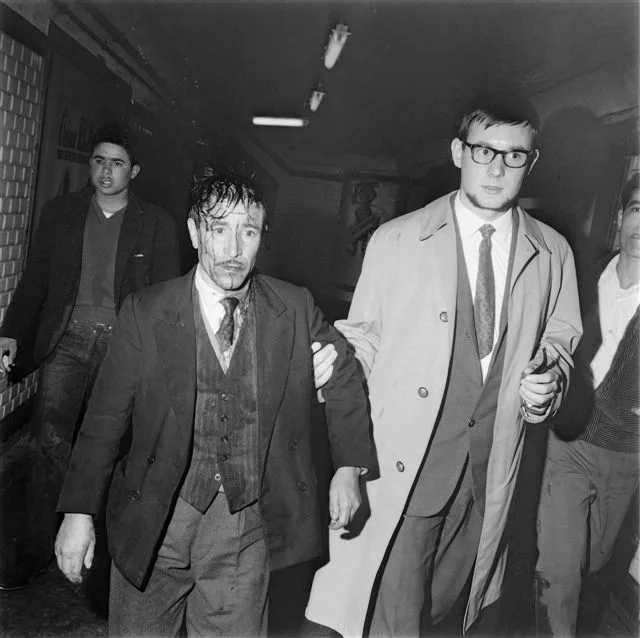
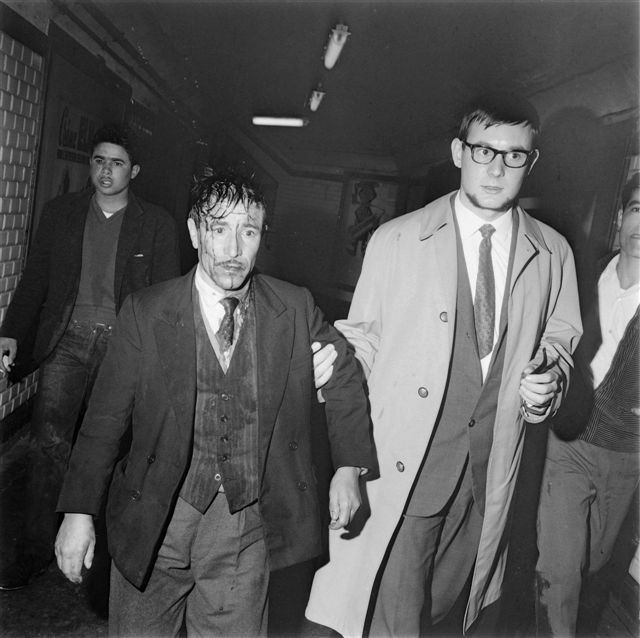
In the Paris metro on October 17, 1961 / Copyright Elie Kagan/BDIC
October 17, 1961: in Paris dead bodies flow along the Seine, at least 200 that night. Reading the documents and memos of the Paris Prefecture of Police, we see the tragedy is the result of a premeditated policy of police violence, encouraged by those on high. Within those same documents we can see that the authorities were well aware of the peaceful nature of the event organized by the National Liberation Front (FLN) of Algeria.
On the day of the 17th, the Service d’action technique (SAT) of the prefecture, a kind of intelligence agency with specialist knowledge of Algerian separatists, inform the office of the Prefect Maurice Papon of the nature of the event in clear terms (see document below). According to the SAT, for the FLN:
It’s about everyone being out and being seen, especially after the curfew, in order to protest peacefully against recent measures implemented by the Prefecture. Some officials have called on those involved to bring their wives and children with them.
“Staggering”
The protesters encounter deadly police violence. At least 200 people of Algerian descent are murdered – thrown from bridges, shot, or beaten to death with batons. Gérard Monate, a policeman at the time and a member of the General Police Union, attended several internal meetings at the Prefecture of Police about the events. Several years later, he delivered a startling account (see document below):
Every Algerian became a potential enemy and had to be subjected to the rigors of the police. We saw it start and then get worse: racketeering, any money found on an Algerian was confiscated; the beatings during all the arrests; the ‘welcoming committee’, during the round-ups the arrested Algerians had to enter the police premises through two rows of agents clubbing them with batons. The rampage became uncontrollable and we knew that all the protests would have a dramatic result. Unfortunately this is what happened during the clashes of October 1961. There have been deaths and injuries (…) It was staggering! The official death toll is derisory compared to the reality.
No investigation
The code of silence then takes hold throughout the police administration. The tragedy of October 61 is not entered into the official record, covered up by everyone in government in the name of the national interest. The only exception is a group of republican policemen who are behind an accusatory leaflet dated October 31. On December 1, 1961, in his internal newsletter (viewable below), the Prefect of Police Maurice Papon welcomes the fact that no independent investigation has been set up to look into the events:
I am opposed to the establishment of commissions of enquiry and, as I have already shared with some of you, the elected representatives of Paris and the Seine at the conclusion of their deliberations have elected to express their confidence in you.
Illustrations: Loguy pour Owni /-)
Photos: Elie Kagan, with permission from the Bibliothèque de Documentation internationale contemporaine, copyright Elie Kagan/BDIC
💬 Discussion
No comments yet. Be the first to comment!