
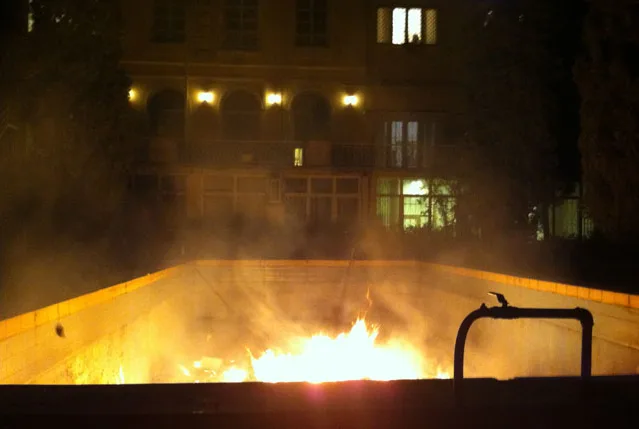
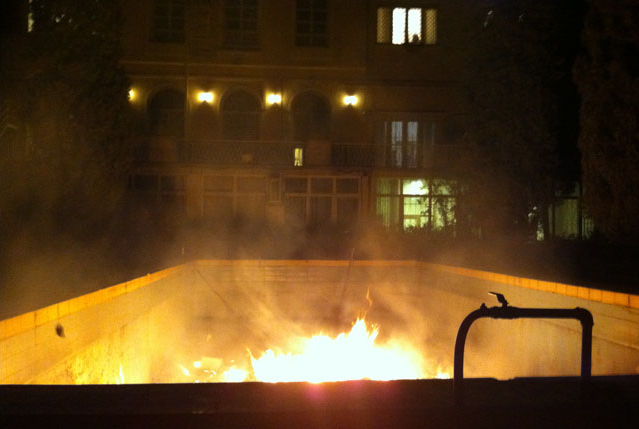
Diplomatic archives burning in the swimming pool of the French embassy in Iran. © OWNI
For nearly a week in early December, black smoke billowed from the French Embassy in Iran. Years of diplomatic archives were being burned in the swimming pool of the embassy, initiated by French officials (as evidenced by photos that OWNI have obtained). The measure was intended as preventive, two days after the raiding of British diplomatic sites in Tehran.
On November 29, a militia linked to the Iranian regime stormed two British diplomatic enclaves. The small crowd ransacked the building, burned a portrait of Queen and raised an Islamic Republic flag. The episode brought to mind the US embassy hostage crisis that occurred during the 1979 revolution. European embassies were united in their condemnation of an attack described as “outrageous” by French President Nicolas Sarkozy.
The French Foreign Ministry recalled its ambassador for consultation, “in light of this flagrant and unacceptable violation of the Vienna Convention on Diplomatic Relations, and the severity of violence.” Several members of the European Union did the same, including Germany, Sweden and the Netherlands.
Fearing for the safety of its embassy, a decision was made on the evening of December 1 to destroy the diplomatic archives. As the French ambassador Bruno Foucher headed back to Paris, embassy staff were summoned. A diplomatic telegram was read out ordering that all cultural, economic and military services must close and personnel be repatriated within the week.
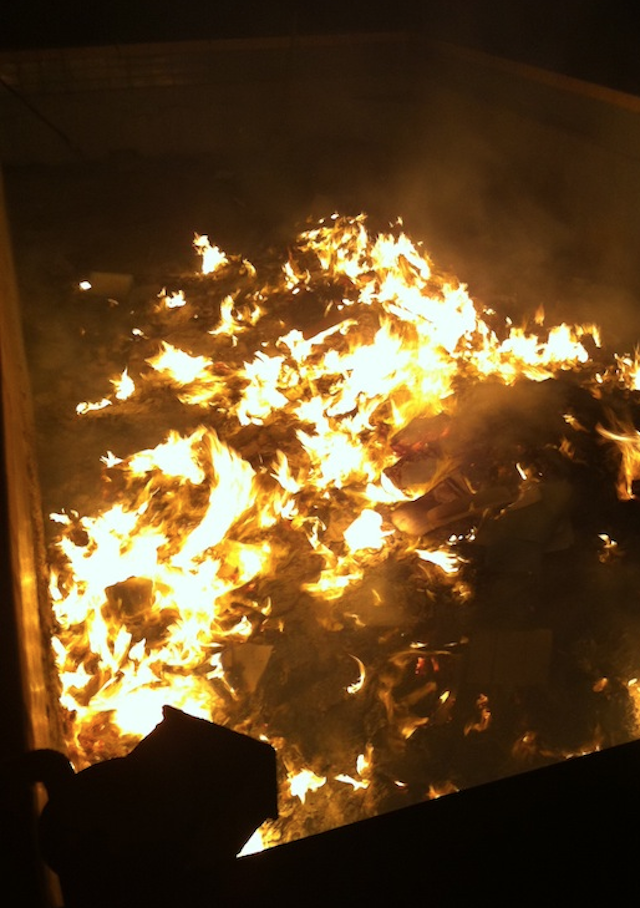
© OWNI
Swimming pool
They left seven days later on the night of Thursday, December 8. Meanwhile, the pool of the embassy was turned into an incinerator. Over the course of a week the archives of all the diplomatic services were burned. The consulate destroyed everything except the most recent documents, as did the cultural service, located in the north of the city.
Involving numerous round trip between the north and the centre of Tehran, where the embassy is located, officials destroyed scholarship applications of Iranian students, documents relating to cultural events, and diplomatic telegrams. Officially, this appears to have been done to protect Iranians in the case of a similar attack to that which occurred on the British embassy. The Iranian regime, paranoid when it comes to contacts with foreigners, could target some citizens if evidence of a close relationship to foreign diplomatic representatives was exposed.
Part of the archive escaped the destruction. These documents were placed in a sealed diplomatic container, and then shipped back to France. France are the only country believed to have undertaken such a drastic measure.
In recent years, diplomatic relations between France and Iran have experienced serious tensions. Since the beginning of his presidency, Nicolas Sarkozy has championed a tough stance toward Iran. Following the disputed re-election of Mahmoud Ahmadinejad in June 2009, Iran arrested a French national, a lecturer at the Technical University of Isfahan. She was held for six weeks in detention, then placed under house arrest on August 16, before subsequently being released on May 16, 2010.
All images © OWNI
This article originally appeared in French on Owni.fr under the title Bûcher diplomatique à Téhéran
💬 Discussion
No comments yet. Be the first to comment!