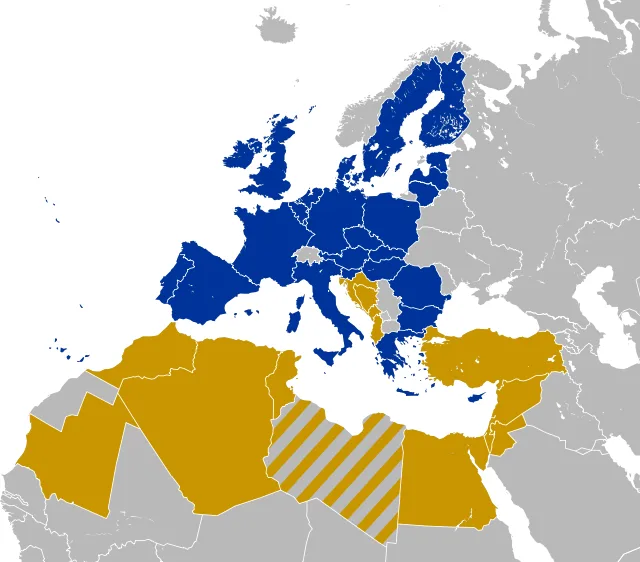
Initially, the Union for the Mediterranean (UfM) began as a project that seemed to have much potential. Suggested to Nicolas Sarkozy by his advisor Henri Guanio, the creation of the new organization was one of the campaign promises during the 2007 election. The objective was to bring together the nations that bordered the Mediterranean. On February of 2007, Nicolas Sarkozy made a speech in Toulon where he declared “The countries in the Mediterranean must take control of their destiny that geography and history has created for them.” After much negotiations during a summit in Paris, the UfM was created on July 13, 2008.
The German Chancellor, Angela Merkel, opposed [FR] a union which just included the countries bordering the Mediterranean. After the newly elected French president reviewed the plan, it was decided that the UfM would integrate the 27 members of the European Union along with the countries on the southern part of the Mediterranean. The UfM was intended to replace the Barcelona Process, which was launched in 1995. The main topics for the previous organization focused on dialogues concerning security, cultural, and economics issues. According to Jean-Baptiste Buffet, an associate researcher at the think-tank Thomas More, the successor organization’s objective is centred around “the economic dynamics.”
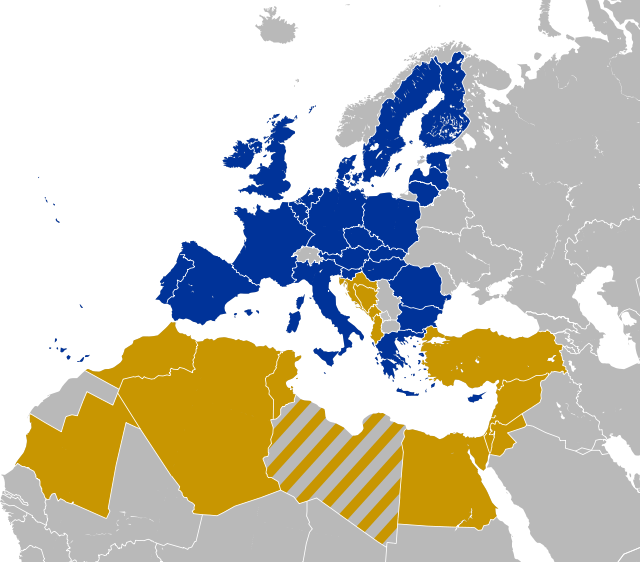
- Blue = EU states. Yellow = UfM states. Yellow stripes = observer status.
The UfM is structured around six initiatives which are mainly related to the environment, economic development and education:
- The de-pollution of the Mediterranean
- A Mediterranean solar energy plan
- A program for the prevention and response to natural and man-made disasters
- Transportation projects such as “the establishment of maritime and land highways that connect ports and improve rail connections,” which will help boost the economy
- The Euro-Mediterranean University, built in Slovenia
- The Mediterranean Business Development Initiative, which will provide “technical assistance and access to finance” for small and middle sized enterprises.
A repeat of the Barcelona Process?
Is the UfM that simple? The joint declaration from the Paris summit in July of 2008 stated another objective:
“The common political will to revitalize efforts to transform the Mediterranean into an area of peace, democracy, cooperation and prosperity.”
A few months later, Nicolas Sarkozy referred to the history of the EU’s founding to justify the UfM’s existence: “We have to learn to make peace, to work together on projects like the ones Jean Monnet did in his time.” He added “We must make the Mediterranean an area of peace while it is a place of confrontation.”
Yet this problem of confrontation is exactly why Barcelona failed. Member states were unable to overcome disagreements regarding current and latent conflicts (Cyprus, Palestine), leaving the Barcelona Process disempowered. In an article [FR] published by Le Monde dated February 23, 2011, a group of diplomats denounced (under conditions of anonymity) the “launch of a Union that is unprepared for the challenge, especially despite warnings from the Quai d’Orsay who wanted to modify the objectives and process.” De facto, the UfM is living the same difficulties as the Barcelona Process. Henri Guaino violently denounced [FR] the “propaganda” published in Le Monde, claiming it was necessary to accept the Mediterranean “as it is.”
The breaking point
After “Operation Cast Lead” was conducted by Israel in the Gaza Strip in January 2009, the Arab leaders refused to sit next to and cooperate with Israeli leaders. The UfM activities were formally suspended at Egypt’s request. Since then [FR], no summit or even a meeting between foreign ministers has taken place. When Secretary General Jordanien Ahmad resigned [FR] on January 26 in the midst of the revolutions, he noted enigmatically “conditions have changed.”
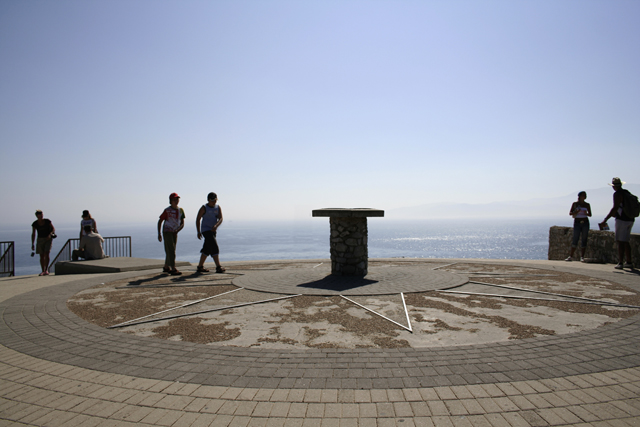
The day after his resignation, the spokesman for the French Foreign Ministry Bernard Valero called on the Mediterranean [FR] to “stop being a place of conflict, violence, and tragedy and become a place of sharing, cooperation, creation, development, and cultural peace.” By this time, the intense political crisis in the south of the Mediterranean already brought down Ben Ali’s regime and began to undermine Mubarak in Egypt.
According to Maxime Gyet [FR], the director of Ile-de-France for the president’s cabinet, the context around these crises reveal the structural weaknesses in the UfM:“It’s the strange coupling of Western democracies with authoritarian regimes” which makes it impossible for the UfM to face the challenges posed by the changed political environment in North Africa. The Mediterranean organization began to “reverse the growth of people’s democratic aspirations,” he said before mentioning the composition in the UfM.
Diplomatic deadlock
The organization did not rely on elected representatives but rather on authoritarian regimes. Small entrepreneurs, elected officials, and other associations were never involved in the decision-making process. During the European Council meeting of March 13, 2008 which sealed the fate of the UfM, Nicolas Sarkozy welcomed the agreements from the countries on the south shore of the Mediterranean. Gaddafi, Ben Ali, and the king of Morocco Maroc Mohammed VI were “completely mobilized” around the UfM. Moubarak was “very determined to fulfill the objectives.” Bouteflika, the Algerian president, had “no objections.” Yet only a few months later in June, Gaddafi changed his tone and accused the UfM of wanting to “tear apart the Arab-African unity.“ Meanwhile, Mubarak became co-chair of the organization.
The UfM fell quiet since the collapse of the Tunisian and Egyptian regimes. The organization’s participation is made evident from a statement by Henri Guaino:
Should the UfM be just with ourselves or include the southern Mediterranean countries?
With this diplomatic impasse, clearly the environment is not conductive for additional internal divisions. With the departure of the Secretary General, certain diplomats were quick to assure [SP] that the diplomatic deadlock that was the most critical is with their European partners, contrary to the belief that it is the tensions in the Israeli-Palestinian conflict.
The countries north of the Mediterranean are gazing eastward, as Latin American is eager to seize investments for themselves. The political and procedural governance of the UfM is crippled, as the EU remained mute since the early revolts on the southern shores. Political tensions persist, and despite initial negotiations the Union for the Mediterranean has not been revived. After a shaky beginning, has the end of the organization already been announced?
—
>> Photo Credits: Flickr CC Marco Vossen / WikiMedia Commons / Tinette
Translation: Stefanie Chernow
💬 Discussion
No comments yet. Be the first to comment!