
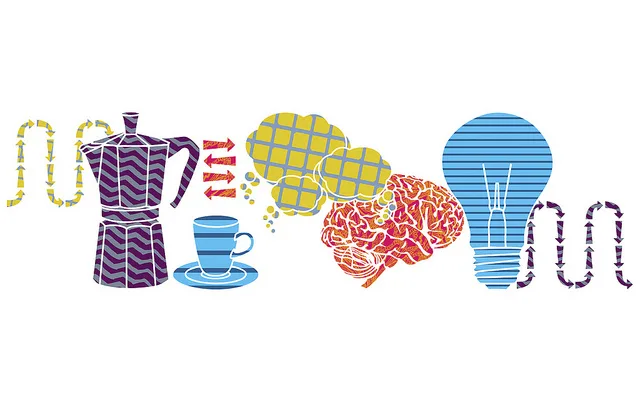
Is man a rational animal? It’s a debatable question which has historically been rooted in philosophy: yes, no, maybe yes, maybe no.
However, recent research related to the functioning of the brain could drastically change everything. The once philosophical question has today become a subject of scientific research. What have we discovered?
The emotional animal
Man is an emotional animal. He is a survivor of natural selection from the Savannah, an accomplishment which was based on his intuitions rather than calculations. Take this strategy game for example: Each time someone plays the game, he has a chance of winning 150 euros or losing 100 euros, and he can play as many times as he wants. In the majority of cases, people will refuse to play. Mathematically, the gains and losses cancel each other out and there is even a 25% of winning at the end. Interestingly, certain people with brain injuries are better at evaluating the risk-benefit balance than the average person. Would homo economicus have been eaten in the jungle?
Our environment directly determines some of our decisions. You want a warmer feeling of trust between you and a potential client? Well, make it warmer – literally. Offer him a cup of coffee or tea rather than an iced drink. According to psychology researchers at Yale, this “warmer” ambiance will increase the chances of cutting a deal.
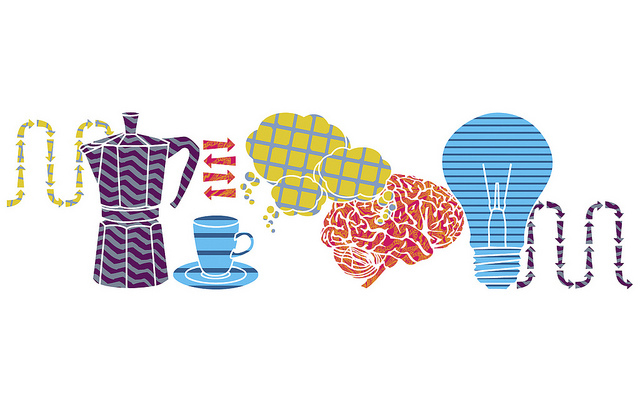 Researcher Dan Aryeli, professor of behavioral economics and author of the book C’est (vraiment?) moi qui décide (Am I really the one who makes the decisions?) conducted a study on how people make value judgements. He interviewed subjects on obscure historic dates (such as the wedding of Attila). Naturally people made a guess that was a shot in the dark. Afterwards he asked the person to evaluate the price of a piece a furniture. They found that the subjects who chose a lower number for the date will also estimate a lower monetary value on the furniture. Ariely explains that the subjects “anchored” the first number in their memory, and following estimates were based on this starting point.
This is one example among hundreds. Researchers continue to find new evidence of the brain’s fundamentally irrational nature through statistical studies and neurological examinations such as MRI exams. In reality, it’s difficult to draw hard conclusions from these studies.
A second look at economics and politics
Because the methodology can always be questioned, we don’t know exactly what is happening inside the brain. The MRI is far from being the ultimate tool for studying the brain, much to our disappointment. Despite these uncertainties, some findings have conclusively changed the terms of the debate – changing the way we think about the economy and politics.
Nobel laureate Daniel Kahnman is considered the father of behavioral economics (sometimes referred to as neuroeconomics). He was the first person to attempt to build an economical framework for how the brain functions instead of assuming it to be a perfectly reasonable actor. Kahnman poses two types of decision making processes: “system 1″ and “system 2.” The latter is the “classical” lines of reasoning following intellectuals and philosophers. Yet there are drawbacks to this system as it requires more time before a decision is finally reached. The “system 1″ is the method ingrained since the beginning of human evolution – it works instantaneously.
When our ancestors were being chased by saber-toothed tigers, they didn’t have the luxury to sit down and weigh their options. “System 1″ is not suitable for environments lurking with predators more dangerous than big cats – such as the trading floors on Walls Street or the malls two days before Christmas. The key is to use the best system given the situation.

Some have tried to apply behavioral economics to politics. Richard Thaler and Cass Sunstein, authors of the book Nudge, are redefining the future of public policy making. They promote the ideology that liberalism had a paternal undertone – instead of having legal constraints, it “pushes citizens” to choose “spontaneously” what is best for himself and/or the society.
So in the context of the United States (when pensions are provided by the company), employees are not asked if they want insurance because the process is done automatically. If the employee does not want to be insured, it’s his responsibility to make the effort to change the decision. It’s a similar situation when you’re offered a one month free subscription – you must make the effort to stop the services before the end of the month otherwise you will start paying automatically. This method is used more and more, and is one of the most annoying as well!
Neuroimaging: the ultimate marketing strategy?
In 2008 Cass Sunstein was appointed to the position of Administrator of Information and Regulatory Affairs for the Obama administration, suggesting that these trends were becoming more popular. Naturally, companies of all sorts were drawn to the findings from behavioral economics in hopes they could draw conclusions about their consumers from brain studies. Even the Pepsi vs Coke battle has taken to using neuroimaging to unveil the affects of marketing on consumers.
It’s necessary to recognize that the research goes beyond the convictions of daily horoscopes. In November 2007 during the US presidential primaries, an article published by the New York Times claiming neuroimaging could forecast the election triggered a controversy in the scientific blogosphere. As more of a discredit to the field, the authors of the article were researchers themselves and made their piece look more like an infomercial. Is neuroimaging nothing more that a marketing strategy? As research techniques progress, it’s possible that the pseudo-scientific speculation today could prove to be effective tomorrow.
—
Photo Credits: FlickR CC Silvia Pavone / lapolab / Mazzarello Media and Arts
💬 Discussion
No comments yet. Be the first to comment!