
When we are buried under vast mountains of endless goods to consume, we find ourselves inevitably buried under heaps of waste. Does this cycle truly bring with it a type of equilibrium through which we can find stability and provide a lasting future for our global civilization?
After 13 years of investigation, Atomik Park describes the impact on the health of workers (like long-time employees in French and American nuclear plants) by examining the emergency relief workers involved in the Chernobyl incident. In this interview, initially published in 2006, the author describes how the importance we as a global society placed upon the “nuclear machine” and nuclear energy has now become a necessary part of our lives.
Jean-Philippe Desbordes: The results of the report were actually known in advance because the IAEA – responsible for evaluating incidents, such as the one at Chernoby – classified a confidential annex of the Soviet’s report conducted during that time, known as annex 7. After the incident, the Soviet Union was required to explain how an accident of such epic proportions could have occurred within one of the most powerful reactors in their nuclear plant. The Soviets were also required to assess the extent of damage as quickly as possible.
In the midst of widespread public panic, the Soviet scientists adopted an attitude that held in the foreground the harsh memory of their Stalinist totalitarian past: After having thought about the gravity of the situation, they simply did not want the accident on their consciences and knew they could not keep it a secret. Consequently, they decided to give Politburo all the real, raw data – even though they could have been criminally charged because of the accident. The report was clear, precise, and honest. When it arrived on the desks of the officials at the IAEA in Geneva one month after the accident, the raw data and the situation that was described in extremely frank and detailed terms making it too overwhelming to give to the public. As a result, the IAEA decided to keep the annex classified.
JPD: The IAEA was created to facilitate the development of the civil nuclear industry and to ensure its proper operations. It was unthinkable that the agency would do anything other than its stated objectives. Since the Soviets were the major victims of this incident, they could not lie about it to their peers. Moreover, numerous debates took place within Soviet families concerning why so many men (who were husbands and fathers), perceived as heroes, were dying after only three weeks of working onsite at Chernobyl. Regarding the numbers, we have two different claims: On one hand, we have the 39 official deaths reported. On the other hand, we have the reports from the associations of the emergency workers who covered the power plant with a protective concrete shell to prevent radiation waves from escaping. They claim that there were at least 50,000 victims including emergency workers and victims in surrounding areas. When the results vary anywhere from 39 to 50,000 victims, this obviously means we have quite a large margin of uncertainty! The reality concerning the victims’ health problems is definitely between the two numbers and much larger than any official reports have been saying since 1986.
I never encountered any major difficulties…Then again, an investigation into this subject proves to be quite difficult. It’s a very complex issue because all the information is seemingly codified in such as way that it appears muddled and riddled with encryptions. The ramifications concerning health are at the heart of the problem, and that is what can change how nuclear energy and projects are viewed. The effects on victims’ health seriously affects the image and power of companies and agencies who are associated with nuclear energy – whether it be Areva, EDF, or the Atomic Energy Commission (AEC). Nuclear power’s impact on peoples’ health remains of the highest priority for all these agencies’ communication strategies. The ability to access information from these organizations emphasizes that people on the inside dedicate their time to making transparency present and real. This transparency consists of data that makes a certain idea to appear completely indisputable: Nuclear energy is very clean. However, this is not the case. If we unlock and open that closet door, we will find a heap of skeletons at the bottom of that closet. The goal of my book, Atomik Park, is to force into the public sphere those elements which relate to my work’s most central question: “What does man do to man?”
Nuclear power plant workers, like masons, electricians, and plumbers, are losing their meaning in today’s modernizing world. They are rapidly losing their sense of value in the complexities of globalization, and critics of nuclear energy point to the fact that can no longer work as they once did. Because they were so supportive of nuclear energy and efforts to use it, that when they failed to change the beliefs of critics it resulted in a loss of meaning and identity – and some decided to commit suicide. EDF has spent an enormous amount of money to hire full-time consultants, who conduct investigatives to shed light on the cases of suicide clusters involving people who are pronuclear and completely devoted to their work with a myriad of responsibilities. The question that begs to be answered is: Why do these people, who commit suicide, claim that their deaths should be blamed on the emotional distress and horrendous job environments perpetuated by EDF? Certain psychopathological investigations revealed that, personal issues aside, the suicidal individuals’ critiques focused most on the management (or rather mismanagement) executed by human resources. Moreover, the critiques focused on the emotional environment created by this ‘mismanagement’ as well as feelings of humiliation, scorn, and worthlessness felt by the mentally ill workers. The consultants call this method the “overthrow of the ideal.” The internal documents that I was able to access clearly turned the attention toward this specific dilemma of suicide, which inevitably throws into question the very security of the power plants if the people who work in them are mentally unstable.
The experiences of these nuclear power plant workers can have a considerable impact in terms of security. One director of a nuclear plant in northern France, who chooses his words carefully, says, “Concerning the current situation, making the wrong choices could jeopardize the very future of French nuclear power plants.” It would be very unfortunate if a “French Chernobyl” occurred. However, so far all is well, and we should not overdramatize the matter. We are not facing a problem related to specific catastrophic-like events, but rather we are facing the problems of aging nuclear power plant facilities and quickly evolving internal operations.
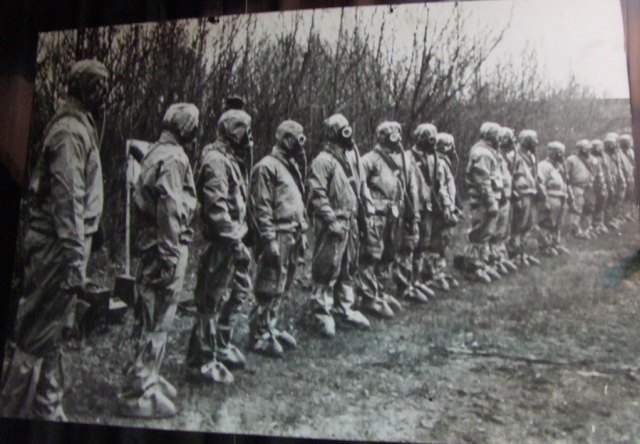
Distribution of amounts of exposure to radiation and “technological bluff”
Yes it definitely affects the ability to medically monitor the workers. For example, the central director of maintenance operations at a nuclear power plant has several things he or she must do, like changing the valves, repairing of any pipes in the primary circuits, and safely removing the uranium rods so that they can be transferred to a contaminated, quarantine zone. Each of these tasks represents a certain number of “doses” that the director would divide between his or her employees. For example, climbing into a manhole to open a steam generator represents quite a large “dose” of radiation. If only one person is assigned this task, he would very quickly become unable to work for an extended period of time. In other words, in less than 15 days, that worker will have already obtained the maximum amount of exposure to radiation expected over period of three months worth of work. Therein lies the necessity for multiple people to alternate executing the same task and that is also the reason for hiring subcontractors. Also, the subcontractors will often remove their dosimeters in order to continue to work, all the while absorbing doses of radiation that are not calculated into those workers’ final total intakes. This, of course, makes it quite difficult to properly monitor workers’ actual exposure to radiation.
There really is no solid answer to that, especially when taking into consideration the vast amount of investments made in nuclear power since the creation of the French nuclear program. The problems we face in dealing with nuclear power are not merely ‘huge,’ but rather they are gargantuan. What good would it do to abandon nuclear power now when so much time, effort, energy, and intelligence has been invested already?
What we have is a huge “machine” and system that was made completely for us, the people in this world. Up until recently, we were never asked our opinions on the matter. What scares us about nuclear energy is the excessiveness of the machine, which is overwhelming. This is what Jacques Ellul called the “technological bluff.” Escaping reality through technology is like giving this machine the means to keep ruling our lives. What would a world controlled entirely by machines, especially by these machines, look like? That has been the insistent, troublesome question since the Industrial Revolution.
Everything concerning nuclear power happens as if we were in the production of Chaplin’s Modern Times. We spend much of our time hoping to best ourselves by means of a technological advancement whether it’s nuclear, genetic, or oil. Yet again, we face the problem of excess. We think we can harness the entirety of our planet’s resources to suit our needs as part of an ideology that is purely growth for growth’s sake.
This infinite spiral—this ideology of progress—takes us far away from where we should be. This is a problem for the global community. How far are we willing to go? Shouldn’t we rather strive for balance? But try and tell people to consume less… There is a newer dimension to the human way of thought and living that can be identified as the corruption of comfort. When we are buried under vast mountains of endless goods to consume, we find ourselves inevitably buried under heaps of waste. Does this cycle truly bring with it a type of equilibrium through which we can find stability and provide a lasting future for our global civilization? I doubt it.
–
This article was initially published on the blog Bastamag under the title Nucléaire: “Nous faisons face à une machine démesurée”
Photo Credits FlickR: HeyRocker, stahlmandesign (1 et 2) Fi Dot
💬 Discussion
No comments yet. Be the first to comment!