
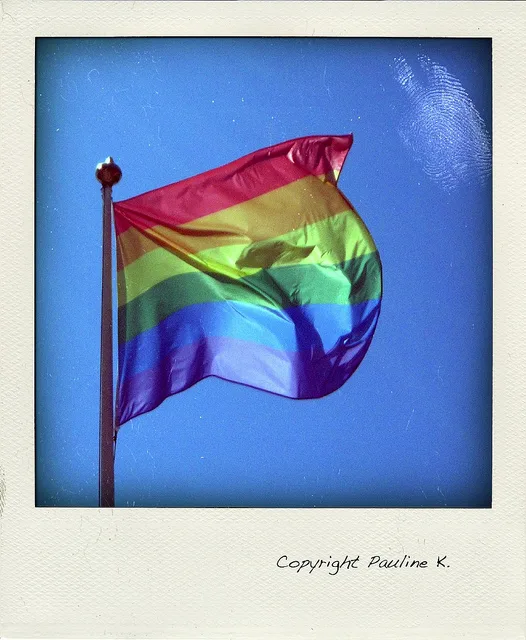
For several years now, the European Union has been interested in the question of sexuality. In 2002, Van Lancker made the suggestion in a report from the EU Parliament to initiating “peer review” techniques concerning sexual and reproductive rights. Since 2008, this technique was adopted by Gisele Hamlimi (a lawyer and advocate for woman’s rights), in an attempt to set the standard for incorporating the best existing sexuality laws into Europe.
Thanks to new statistics, the liberalisation of society, and scientific progress, this issue can be analyzed on a deeper level. Last December this subject was the main theme at a conference organized by the Young European University, named “The sexuality of youth in Europe: practices, genders, and minorities.”
There are numerous books and articles questioning the ideals of the European social and political model…but what about the European sexuality model?
With the help of national surveys, Nathalie Bajos, a sociologist at Inserm, synthesized the evolution of sexual practices. It’s worth noting that the idea of equality emerged not only over time, but also over the dimension of space in Europe. For example, the age of entry into sexuality has undergone significant changes between WWII and present day – from a gap of 4 years to a few months. The average age men enter into the world of sexuality is 17, while for women it’s 17 years and 6 months.
A double standard still persists
Geographically speaking, distinctions in sexual standards can made within Europe. Double standards continue to exist in the south due to constraining premarital women’s freedoms. Yet in northern countries ideals of equality are valued, and in these countries sexual initiation is even earlier for woman than for men. This trend of losing ones virginity earlier was part of these northern countries culture stating in the 60s, before it caught on in the Western and Central Europe in the 70s and in Southern Europe in the 80s and 90s. From this perspective, the average age of marriage for women is younger in Eastern Europe (22-24 years) than in Western Europe (27-30 years).
HIV prevention campaigns, the secularization of sexual attitudes and liberal ideology have also led to a downward trend in teenage pregnancies and STDs in Western Europe. Unfortunately this movement is not as effective in Eastern Europe due to the lack of public health resources and contraceptives. Concerning STDs, the lack of an overarching European monitoring system is somewhat deplorable. Despite the geographical differences, travel between European countries is creating convergences of sexual practices.
Women’s rights
Two major topics concerning women’s rights are directly related to sexuality: control over their reproductive rights through contraception and abortion, and the fight against sexual violence.
The right to abortion is a sensitive subject in Europe. It’s true that the practice is not a crime in the majority of countries, and it’s supported by several pro-choice institutions in Europe. Yet predominantly Catholic countries like Ireland, Poland and Malta a committed to the protecting the embryo.
This is the reason why there are additional annexes attached to the Maastricht Treaty guaranteeing that legislation on abortion remains under national sovereignty. Although European citizens of different countries can undergo the procedure in a country where abortion is legal without penalization.
The promotion of knowledge surrounding contraceptives and legals rights facilitates sexual fulfillment between the body and mind. Various national surveys show that more educated woman on the subject have more diverse sexual practices, such as being more open to masturbation and oral sex and refraining from pornography.
Additionally, education in schools and information campaigns help fight against a serious phenomenon present in all European countries and social classes: domestic violence. In 1999, a report on Europe claimed “In the EU, 1 out of 5 women will be the victim of violence at the hand of her partner.” This powerful statement lead the European Commission to halt this trend and thus initiated the Daphne program in 2000. Its objective is to organize campaigns of zero tolerance against violence (“Domestic violence is a crime.”), ensure the exchange of information and practices among EU countries, and assist victims of violence. Currently, Daphne III was put into effect by European Parliament and Council in June 2007, which covers the period from 2007 to 2013.
Defending the LGBT cause

Previously the discussions around sexuality in European has been limited to between sexes and the convergences of sexual practices – however this does mean there is a unity of sexual practices. Diversity still exists. In truly examining sexuality in Europe is must incorporate all the types of sexualities that exist – including those in the LGBT (Lesbian, Gay, Bisexual and Transgender) community, who are often the victims of discrimination.
At the conference on “The sexuality of youth in Europe,” Pierre Serna, member of the Executive Board for the ILGA (International Lesbian, Gay, Trans, and Intersex Association) gave a presentation on his organization’s actions. They lobby in 45 European countries and are funded by the European Commission. The ILGA-Europe provides expertise and strategy development to European institutions, such as the assisting in the current “Europe 2020.” It also monitors the application of certain directives. Although with the presences of certain homophobic people in the European Parliament, it is not always easy to create progressive laws.
Yet the ILGA has had its successes as well. For example, several countries such as the Czech Republic have added LGBT rights into their constitution. In 2004, the ILGA-Europe blocked Rocco Buttiglione, Italian politician and openly homophobic, from becoming the European Commissioner.
Seems like the rainbow is successfully continuing to pass through the starry blue sky.
—
Article originally published on the blog Le Taurillon under the title “Europe, sexe and fun”
Photo credits FlickR CC : kozumel / Alain Bachellier / Pauline K.
💬 Discussion
No comments yet. Be the first to comment!