
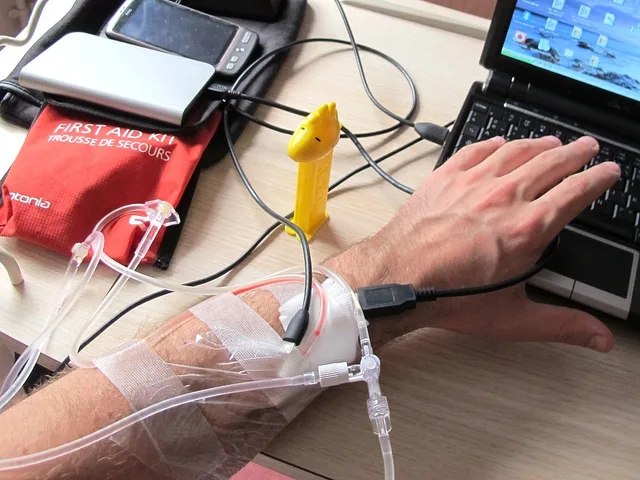
The radio station “France Culture” broadcasts a show that I like, called “Place de la toile.” For those interested in digital culture – but who like myself are just rookies – it’s always exciting. I had the idea for this post after listening to an episode on the history of Hacking. I wrote a first version that is still a draft, and will probably remain that way. This new post was inspired by several events: recent readings on medical ethics, a conference on expensive drugs prescribed outside the regulation of therapeutic goods, a post by Jean-Marie about revolutionary proposals made by our Minister, and by a recent story.
I discovered that Apple was born thanks to the hacking of American phone companies using Captain Crunch’s blue box. Steve Jobs’ evolution is quite fascinating: making blue boxes, selling them to buy hardware, creating the first Mac, and thirty years later becoming the creator of one of the most closed system in the world. How does the AT&T hacker become the creator of iTunes and the Apple store? His metamorphosis is captivating. It shows one of the risks in the obsession with normalizing our society, conveyed by some of the Minister’s measures, such as:
Detecting and monitoring “off label” drug use to identify risky behaviors.
By definition, an off label prescription is considered dangerous, but it could be perceived as innovative as well. When an object is used differently from its intended purpose, the results can sometimes be impressive. I am convinced that the democratization of the Internet is a good thing. These measures have been hastily taken, under pressures from the Mediator scandal [FR]. The system is defensive, and is solely based on surveillance rather than training, accountability and trust building. Contrary to general belief, defensive medicine is expensive and does not improve the quality of treatment.
We want life to be “normal,” where we live in bubble and safe with our illusions of control – yet life is all about risk-taking [FR].
The doctor and the hacker
Medicine is a hazardous activity. We play a game with death, and one way or another eventually we’ll lose. Our goal is to make it last a bit longer. One must respond to the suffering of the patient, his anguish, and his fear about death and disability. Each individual is unique, and our work is more of an art than science. We work from the general to a specific case while mastering as much as we can with our meager knowledge. This is where the worlds of the doctor and the hacker collide.
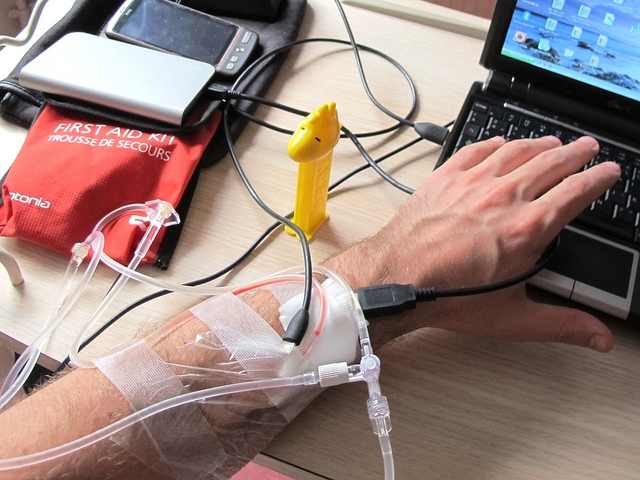
There is a problem, an obstacle, a symptom, a disease. We apply a code, a program, diagnostics, or therapeutical procedures that have been used a hundred times – and suddenly it doesn’t work. What can be done? There are two solutions:
- Look away and say: “I will never understand this system. These symptom are too well-protected, and I do not comprehend this sick person’s illness – nor care to try. I disregard these incomprehensible findings.”
- I will break down this firewall and see behind to the suffering patient who deserves a solution tailored to his needs. We must get our hands dirty and find the right code that will have the least negative impact.
Computer hackers are luckier than medicine hackers. The code [FR] is already known (I might be mistaken, I only have limited knowledge in this field). Doctors use a code that is partially known, juggling sometimes with rather empty concepts than firm science. Finding a solution without knowing exactly how everything works isn’t always the easiest thing.
We often end up fiddling with prescriptions, and sometimes even fiddling with words when we cannot do anything else. That’s the beauty of medicine: gathering as much information in quality and in quantity as possible, and apply it to the patient in relation to his history and his needs. Trying to make a sick person feel better. Sometimes, books and academic experience are enough. We don’t reinvent medicine everyday, only small changes are required. Sometimes, despite a diagnosis, we don’t act as we should because of the human being in front of us. We negotiate with our conscience and forget about perfection in favour of easing the pain. Sometimes, we are floating in uncharted waters and the only thing left to do is decide the most logical reaction. And sometimes, one needs to take daring measures.
A certain amount of liberty in prescribing must be preserved, provided one always justifies the decisions. Collective decision-making can help, and writing down our trial and error process is essential to the medical record.
A healthy exercise would be to justify our decisions when science doesn’t help us decide, or even when there is strong evidence. We tinker with the patient to try to find the most relevant solution. Sometimes we must not compromise, and other times we have to be flexible and adapt ourselves. When the door is closed, I go through the window – because breaking down the door isn’t the solution. Like hackers, we need to know the codes and network as much as possible.
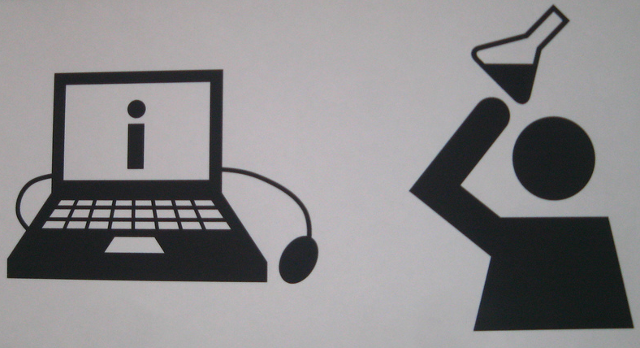
“Supervise but do not restrain”
To be free, one needs to be educated – knowledge liberates. There is a reason why dictatorships burn books. Intellectual challenges lead to improvement. This is why I still love the clinic.
A sick person comes in with a problem and our job is to find the best solution possible. When you speak with programers, they find beauty in a well written code or in a solution found without involving force. It’s the eternal conflict between Thor and Loki. I prefer Loki, even if many find my approach blunt. I use the method I want when I find it necessary.
Regulating authorities must be very careful in limiting our ability to prescribe expensive drugs or off-label products. Certain rare, yet not very exceptional diseases are not usually the subject of sophisticated studies for several reasons. Prescriptions that do not come with a label or have not been studied can provide a proof of concept that will initiate a randomized trial. Off-label prescriptions can improve treatment, so don’t demonize a potentially helpful practice. It definitely needs supervision, as patients must be protected from lunatics. Yet when I see that Simoncini is free do to what he wants, I realize some work needs to be done. We need an “off-label” culture which can analyze practices and check on each patient regularly. Formal discussion is essential tool for this endeavor.
One must supervise – but not restrain – those who push the limits for the sake of a patient. The ultimate goal is to look for an “outside the box” solution so that patients won’t end up in dialysis.
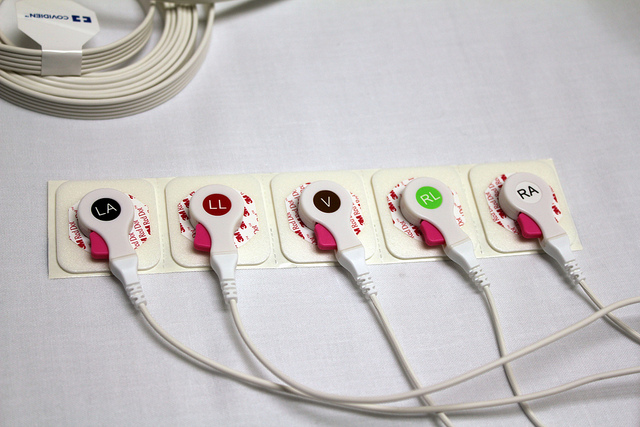
The quest for balance always brings me back, as I’m too fond of renal physiology not to appreciate its beauty. Balance in the world of the living is dynamic, tensions are set in one direction, then another, and every time it comes back to a state compatible with life. This new state isn’t necessarily equivalent to the previous. Illness is a good example. It transforms us. I don’t like the way our time only thinks in terms of 0 or 1 (good or evil), as if there weren’t any numbers between these two figures. I wish I could say definitively in my job what’s right from wrong. It’s often impossible to decide, and your conscience and the patient’s desires usually end up in the mix. Exciting, isn’t it?
A little anecdote
He was 20, slightly retarded, had a crazy mother, and a chronic kidney disease in a terminal phase. He was hospitalized in psychiatric ward to escape his parent’s insanity. I met him for the first time two weeks ago while I was replacing an intern who had left for training. I had been hearing about him for quite a while. I “hacked” his treatment, thinking he would meet with his usual nephrologist once he got out. The hospitalization lingered on, and once he started vomiting I decided it was time to stop playing “only make sure the creatinine levels don’t rise too fast.” 850 of creatinine when you weight 50 kg is never a good sign. My colleague from dialysis managed to find a moment to squeeze the patient in for an appointment. On the first session, the patient refused, and on the second one as well. The third time was on a Thursday. I saw him twice and told him how important dialysis was, and I thought he understood. Obviously, I was wrong. I told my colleagues to call me if anything went wrong and sure enough… bad luck always comes in three.
Hey Stephane, he refused.
When I arrived in the dialysis room he was lying down and very anxious. The intern from the psychiatric ward was with him. He didn’t want to stretch his arm. We were talking when he suddenly roared:
No! No! No!
That was the only thing he could say. He was crawled into a fetal position, like a scared little bird surrounded by scrubs, machines and needles.
The nurse, the intern, and I were talking to him. I wanted to understand why he refused the treatment and to hear any word other than “no” coming out of his mouth. Why not? He couldn’t say. The easy way out was to let it go, but I didn’t want to and neither did the others on the medical team. It takes at least a day to start the dialysis technique. It shouldn’t be after a pulmonary edema or a hyperkalemia. For his sake, but against his will, I wanted the first session to take place quietly on that sunny afternoon rather than by a cold night with the use of neuroleptics in his buttocks. But he resisted. The words didn’t come out and I wanted him to look at me and to describe his anguish and his fear. The emptiness of the word “no” was unbearable.
Was there something else behind this “no”? Was it a refusal to let a woman puncture his skin with a needle? I would never know. Was it the fear of the unknown? I don’t think so, it’s more complex but I’m not a psychiatrist, only a vulgar nephrologist.
We were all talking and I was going on with my monomaniac approach: I wanted words. It’s unbearable to be asked for words when you don’t want to talk. All your life you were taught that words are dangerous. So, eventually, the needle in the hands of a smiling young girl doesn’t seem so scary. Suddenly, because of my childish stubbornness, the nurse’s quiet smile, and the intern’s tranquillity, he finaly let it go and stretched his arm.
I stayed for this difficult moment but fortunately the EMLA worked. The nurse used the first needle while the patient looked at me in the eyes. I didn’t want him to see the needle piercing his skin so I talked to him but he preferred stare at the nurse’s cleavage rather than my eyes. That was it, he didn’t feel anything. We were fixing the needle when he started getting nervous again, almost pulling the needle out of his skin. I kept talking, telling him whatever came to my mind. He calmed down, stretched his arm and the second needle went in without pain. The nurse got him on the machine, which filtered his blood for the next three hours. We congratulated him for being so brave. I was happy that we didn’t need to sedate him, just some conversation. Nothing is definitive – I won’t always be there and it might not be the same nurse next time. We’ll take it day by day.
That’s medicine, brainstorming on an issue that could seems trivial, like how to put an unwilling patient on dialysis. He couldn’t be forced physically or chemically. The three of us never met before, yet after 45 minutes – with our own backgrounds and experiences – we managed to find an elegant solution to this mind-boggling problem: language, the first and ultimate code.
Tenacity is fundamental in medicine.
What an exciting job…
_____
This article was initially published on ”PerrUche en Automne” under the title “De la médecine comme une forme de hacking.”
Photos Credits Flickr CC 

 Divine Harvester,

 PhOtOnQuAnTiQuE,

 daedrius,
 quinn.anya,
  molotalk.
💬 Discussion
No comments yet. Be the first to comment!