
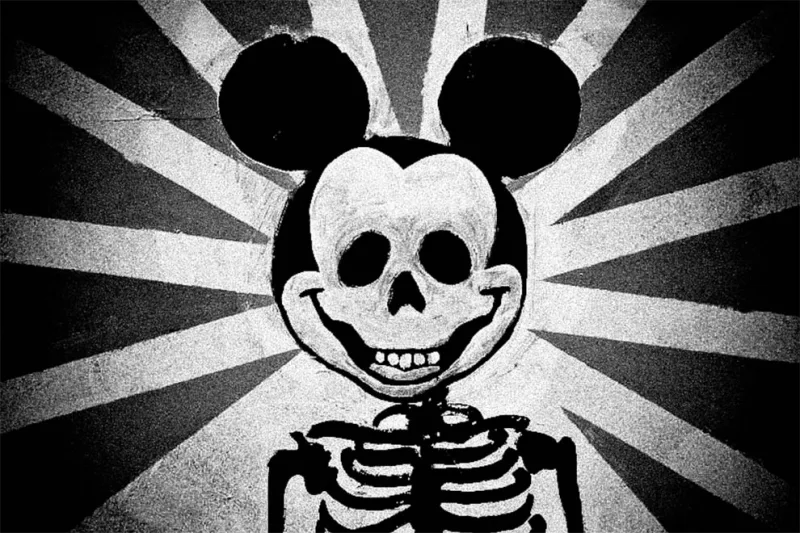
On September 26, Disneyland Paris celebrated the signing of an agreement with unions intended to better manage the psychological risks affecting the theme park’s 14,700 employees. It represented a reassuring message, sent out to editors, in the wake of the suicides of three employees in spring 2010. But it remains to be seen if healthy labor relations have been restored. An on-site investigation conducted by OWNI reveals often miserable working relationships and strange relationships between unions and management.
According to a confidential internal report dated May 2011, which OWNI has obtained a copy of (in French, see below), relations between employees and management are characterized by a systematic aggression. Situations are described that regularly include practices like psychological harassment and bullying.
The 32-page document summarizes two audits carried out in the months following the tragedies of 2010, at the request of the management of the theme park and management of the Walt Disney Company. More than 50% of employees were interviewed in the course of these audits. The stated purpose was to assess the “socio-organizational factors of work-related stress.” This summary was only released in its entirety to senior park officials and members of its work council.
Employees overworked and without support
Positive feelings are expressed by the employees within the document, such as their “pride in the company” and the “good atmosphere” that exists there. But more critical opinions cast a long shadow.
One of the lessons of the two studies relates to the fact that employees have a strong sense of being overloaded with work, and unanimously so (…) Moreover, in parallel with the workload issue, there is a sense of injustice with regard to the way work is distributed (…) One of the direct consequences of this overloading is the perception of an imbalance between private and professional life (…) Less than one employee in two consider their manager a real help in achieving a reasonable balance between their private and professional lives. At all levels employees unanimously feel that senior management do not recognize the reality on the ground.
Disney employees also repeatedly denounced a form of cronyism that allows only some to make progress within the company. According to the document, maintaining “good relations with managers” is essential to opportunities for career development and bonuses.
An ocean
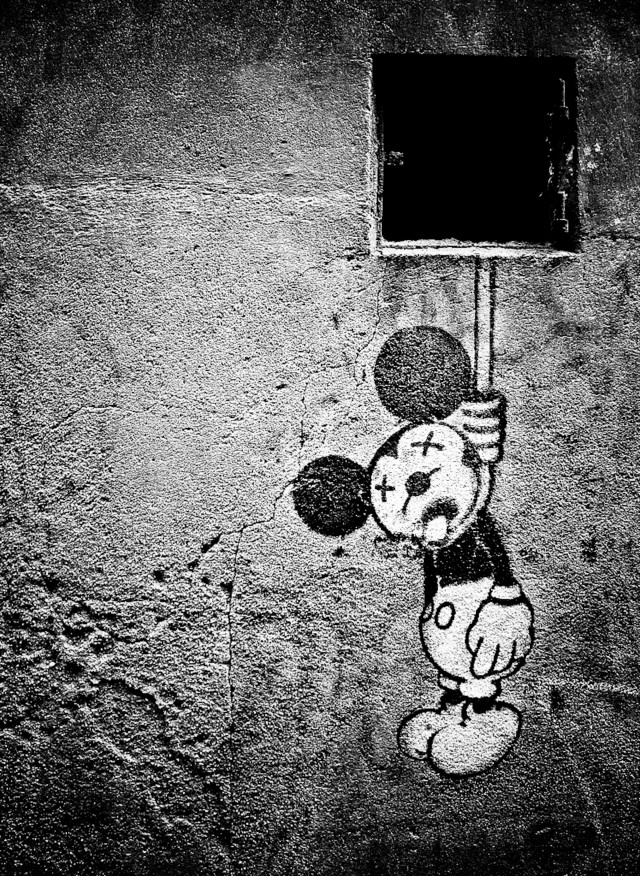
Faced with these problems, an agreement on the psycho-social risks was ratified on September 1 by a majority of unions, following a lengthy series of meetings over the course of 18 months. This agreement was the one mentioned in Disneyland Paris’ statement issued on September 26. The 20 page text redefines each person’s role in the effort to prevent the risk of suicide, improves training, prevention and establishes penalties for harassment. The new measures were wholly insufficient according to Patrick Maldidier, head of the National Union of Autonomous Trade Unions (UNSA), who refused to sign the agreement:
There is an ocean between the agreement we had proposed and what has been signed. The social situation is even worse than before (…) Nothing has been done to allow employees to arrive in the morning to work in good conditions.
No creche for the Disney babies
Maldidier argued the issue of work-related stress is not “inevitable”. But employees faced significant logistical problems daily, like housing:
Most of the park’s housing is reserved for seasonal workers. So the permanent staff need to buy or rent in the area but the costs are inflated. Salary levels are very low – the average wage is just €200 more than the minimum wage. The current situation is catastrophic because, when you get right down to it, it’s hard to pay rent with low wages.
In the same vein, we discovered that the Disney group has refused to install a work nursery for the hundreds of employees who have young children:
This is no longer the same population who started working here. They’ve got married and had children. So naturally, we suggested the establishment of a nursery for employees of the company but there was opposition on the part of management. They justified their refusal by claiming that “the cost was too high” and they “cannot satisfy everyone.” So instead they do nothing for anyone. It’s beyond belief.
Contacted in the course of this investigation, Laurent Manologlou, head of communications for Disneyland Paris, declined to be quoted. In answer to all of our questions, he sent us a short text written by the head of social relations for Disneyland Paris, Karine Raynaud, relating to the negotiation of the agreement in September:
It’s necessary to bear in mind that this is not an isolated negotiation, but was written up in the context of intense negotiations. In June 2011, management like the unions no doubt needed to take a step back in order to find a solution to the apparent impasse. We were faced with deadlock, on the part of some negotiators, on issues such as improving housing support mechanisms or the increase of day care services. But these are subjects which we were conducting further parallel negotiations about, especially those which involve others outside the company, such as collection agencies or local authorities. Another point of disagreement on which we worked, some negotiators believed that we could distinguish enough between awareness procedures and training procedures. We have overhauled the issue of training, that we initially reserved for CEO’s and managers. I realized, during my bilateral meetings during the summer, we had the opportunity to succeed by advancing on this point. With four signatory unions, representing 65% of the vote in recent elections, we entered into a balanced agreement.
Image Credits: Flickr CC Môsieur J [cc-by] , Ti.mo [cc-by-nc-sa]
💬 Discussion
No comments yet. Be the first to comment!