The latest campaign from supporters of the Anonymous hacktivist movement is focusing attention on the Democratic Republic of Congo, where multinationals are accused of trafficking in coltan, a mineral central to phone and laptop manufacturing.
In France, the Ministry of the Interior’s intelligence service is going to war with Anonymous. Last week two alleged members were arrested as part of an investigation into Operation Greenrights. OWNI spoke exclusively with Pierrick Goujon, one of those interrogated.
While Vladimir Putin’s United Russia party won reelection last Sunday, their Soviet-style strategy of attempting to control online activism is increasingly being outwitted by crowd-sourced ingenuity, such as Golos’ map of election law violations.
Instead of merely depicting hackers as virtual pamphleteers for free speech or as digital outlaws, we need to start asking more specific questions about why and when hackers embrace particular attitudes toward different kinds of laws.
In a scene reminiscent of a thousand police dramas, the FBI arrived at the door of 19 year old Mercedes Haefer, guns drawn, at 6am whilst she was still in her pyjamas getting ready for work.
While Lulzsec are being hunted down, we asked Oxblood Ruffin, a Canadian hacker who is a member of the Cult of the Dead Cow (cDc), about Anonymous’s recent operations and the ethics and rules of engagement of hacktivism.
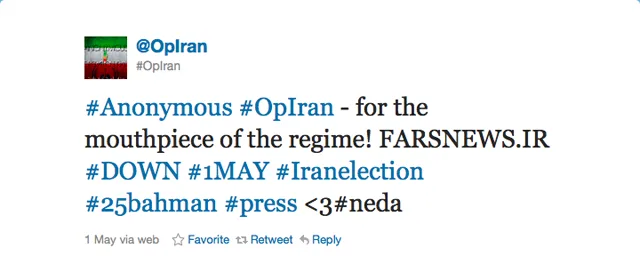
On May 1, Anonymous launched more attacks against the Iranian government’s websites. The Supreme Leader, the President, and the Parliament’s websites remain inaccessible.
Why is the media’s attention still focused on the 15 year-old hacker over the WikiLeaks scandal when these Anonymous users are organizing during the Arab revolts? Can we shed some light onto the behavior of the Anonymous?
Burmese state media has said that an external cyber attack has been launched at its main server, days after critics of the junta blamed it for deliberately sabotaging communications.