
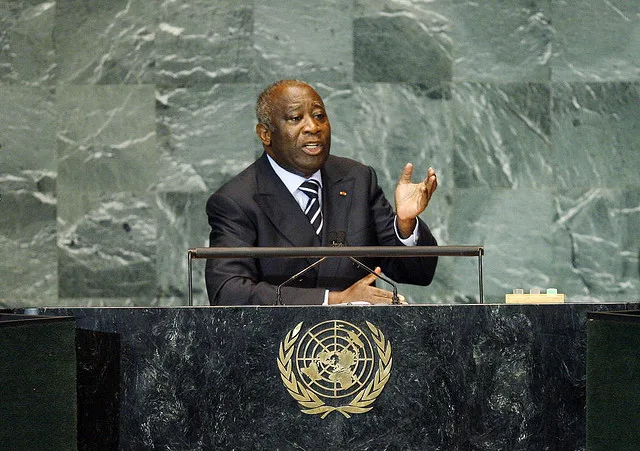
The decision was taken on November 28 2010, in the aftermath of Ivory Coast’s disputed presidential election. The (theoretical) winner of the election, though Alassane Ouattara won, the decision required the consensus of the international community. Considering Laurent Gbagbo does not want to cede political power, the tension between the two opponents is choking off the economy. The race against the clock is near its end, claiming a source in Paris:
This is not a performance, but it has the same effect.
First step: Remove access to liquid cash
There are three aspects to resolving this conflict – diplomacy, money, and the army.
On Christmas Eve, Patrick Archo, the spokesman for Alassance Outtara, had reason to be satisfied. The BCEAO bank (Banque centrale des Etats d’Afrique de l’Ouest) officially cut off life support from Gbago’s political camp.
A month after the showdown election between the two men, the first measures taken were to cut out the liquid cash circulating between the domestic and international economy. The Ivory Coast is part of the CFA zone, which the BCEAO acts as the backbone and permits the flow of trade. The objective of this operation was to sever ties with the outside world (specifically with West Africa) and to ensure that Gbagbo’s signature was no longer recognized by the international monetary authorities.
First mission: Obtain the official positions as part of the 15 shareholders of the BCEAO, which occurred in a matter of weeks. Then release Philippe-Henry Dacoury-Tabley, the president of the bank and a close friend to Gbagbo. On January 24, the man commented on his resignation:
The only regret I have in resigning is that effectively the political games are now going to infect the central bank.
The World Bank followed suit by announcing a freeze on its loans. There remains a little over 200 billion CFA francs in the coffers of the agency in Abidjan, under the supervision of the headquarters in Dakar, Senegal.
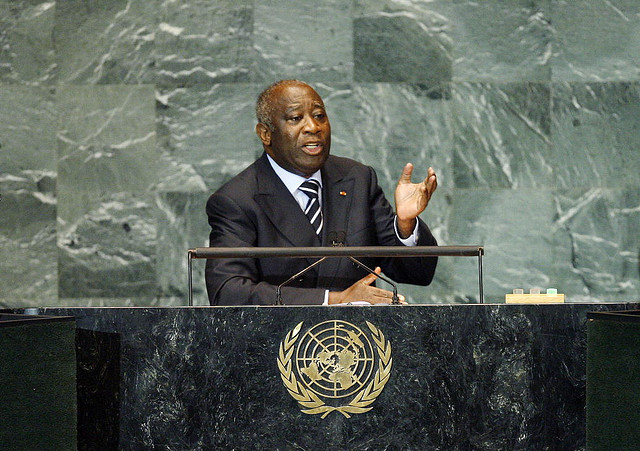
Gbagbo’s reaction: Robbery and extortion
The president’s reaction was almost instantaneous. On January 26, two days after the resignation of Dacoury-Tabley, a scene resembling a Hollywood robbery movie occurred in the basement of BCEAO.
While the unsuspecting armored car was trying to replenish the bank’s economic capital, an armed commando unit entered the bank’s parking lot. The four men join their accomplishes, who held the bank’s employees at gun point. They took 23 bags of bank notes, worth approximately 12 million euros. It was only a light blow to BCEAO in terms of the bank’s total reserves, but the codes to the doors change every since the siege on Dakar. Looks like the Gbagbo’s entourage hit a dead end…until a month later, when the bank was nationalized by the Ivorian president.
Over time, the entire country’s economic activity was blocked due to lack of liquid cash. The chain ran from the BCEAO to central backs, onto commercial banks, and finally companies. The entire country became economically lethargic. The diagnosis of Jean Kacou Diagou, the president of the Confederation of Enterprises in the Ivory Coast, is clear:
We are in the process of killing our economy.
There is a similar problem with taxes – officials are desperately trying to recover money from companies, yet the latter are not sure who exactly they are supposed to pay.
Cutting off the country’s key resources: coffee and cocoa
The other aspect involved in strangling this country’s regime is throttling the economy’s primary resources. While the production of 60,000 barrels of oil can not be confiscated, it’s possible to block the distribution of commodities in Abidjan’s port: coffee and cocoa.
The season was particularly fortunate for this operation, since the majority of beans were stored in the warehouse at the port waiting to be sold. Similar to the American company Cargill, everyone eventually follows the instructions of the United Nations. The beans can only be stored for about 2 months in the warehouse, but no longer. Additionally they dry out and lose weight, and therefore lose market value every day.
After some initial hesitation (because loses were significant) the major shipping lines (Maersk, MSN, CMA-CGM) discontinued their services with the Ivory Coast. In Abidjan, all commodities start to fail: oil, food, and other primary goods. Tensions increase, fueled by violence which occurred more frequently and spread from neighborhood to neighborhood.
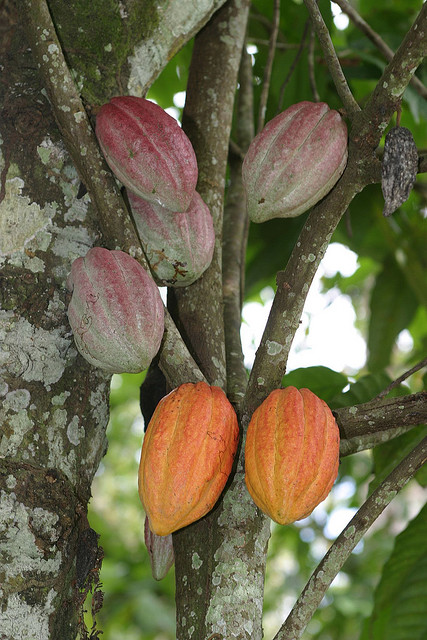
Cocoa
War by hunger
All the factors for a major crisis are now integrated. Yet not all of these aspects are new for this country, some of them have been lingering for 10 years:
- The political conflict is nothing new, the rivalry between Gbagbo and Ouattara is effectively based on divided political clans
- The battle taking place in the media (already largely present in daily newspapers) expanded to include audiovisuals like radio and television – which intensifies the frictions between groups
- While the targeted assassinations on both political sides experienced a lull, The United Nations asserts that the massive killings resumed after the presidential election
What is different in this equation is the entire population is now lacking food and other basic necessities. The uncertainty around food supplies is indicating there could be a worse outcomes to follow. The magnitude of the exodus out of Abidjan in recent days reflects the seriousness of this situation.
In many respects, the parallels between the crisis in the Ivory Coast and the genocide in Rwanda is taking form. This perspective has had very little analysis, yet it comprehensively explains the chaos in Rwanda during 1994.
Researchers have shown the significance of the IMF’s Structural Adjustment Programs, a plan that was structured between 1990 to 1994 in reaction to the rapid and dangerous impoverishment in Rwanda due to extreme social tensions. Clearly, the number of murders committed during the genocide only had heinous motivations.
Will the consequences of Ivory Coast’s “bank run” be similar to Rwanda, except on a a larger and more developed scale? Unfortunately the worst case scenario is probable.
3 scenarios: idealistic, risky and offense
In recent weeks, 3 scenarios have been considered as likely outcomes. All three scenarios concur “the risk of a violent outcome is high, but to what extent?”
- The idealistic scenarios (and also the least plausible): Gbagbo starts to feel the heat, the army wavers, and there is no money to pay civil servants. The outgoing president has the guarantee of judicial impunity (unlikely given the hundreds of deaths on the UN’s official record). He decided to forfeit his position of power to his opponent.
- The risky scenario: Gbagbo launches an attack against the hotel where Ouattara is taking refuge. The new force launches an assault against Yamoussoukro. This opens the game in the country’s administrative capital in Baoules – the stronghold of Houphouet-Boigny.
- The offensive scenario: Ouattara and Soro, deciding the economic pressures are not sufficient, go on the offensive in reaction to the migration in Abidjan and Yamoussoukro.
Another hypothesis is a civil war which seems more likely than the first two scenarios – and also accompanied by general indifference.
-
Photo credits: Flickr CC seneweb ; United Nations Photo ; eosclub
Translation: Stefanie Chernow
💬 Discussion
No comments yet. Be the first to comment!