
For years now the shadow of ACTA, the Anti-Counterfeiting Trade Agreement, has stalked the international regulation of intellectual property. Affecting both the health and cultural sector, the negotiations surrounding the text of the treaty have been shrouded in secrecy from the start, raising fears about its potential threat to certain civil liberties.
That secrecy is now at an end. Last week, 22 European Union countries signed the treaty. While signing does not amount to adopting, it occurs amid escalating tensions between defenders of a free Internet and lobbyists of the ‘cultural industries’. The recent mass mobilization of major Internet players against SOPA and PIPA, along with the shuttering of Megaupload, has placed the issue of ACTA’s adoption in the media spotlight.
Last weekend, following calls from individuals and groups including
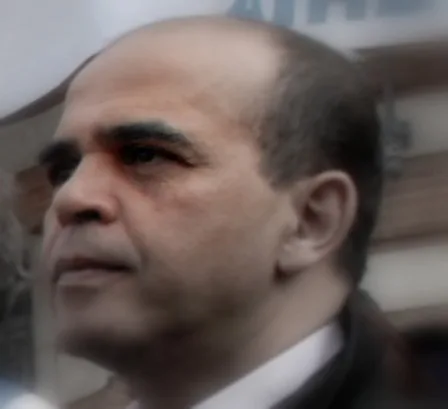
, several anti-ACTA demonstrations took place around Europe. The Alamo for the adoption of the treaty looks set to be its passage through the European Parliament, scheduled to take place between June and September 2012. The French Socialist MEP Kader Arif had been workign as a rapporteur for the project. He resigned just minutes after the 22 states signed it, denouncing the process as a “farce”. OWNI talked with Arif about the implications of adopting the treaty.
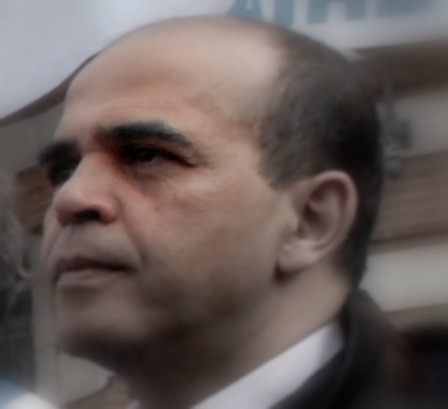
Kader Arif
SOPA and PIPA in the United States, ACTA in the European Parliament: do you think these laws are part of the same movement?
With increasing international competition, particularly at the commercial level, issues of intellectual property are getting increasing attention from governments. This in turn is leading to increased pressure from industry, which always wants to see patents protected as well as possible. But these developments are coming at the expense of the already fragile equilibrium between the protection of undeniably legitimate rights holders, but also the necessary protection of civil liberties. In this sense there is now a real international development calling for greater vigilance from legislators, who must work to preserve this equilibrium.
I will give one example to illustrate the growing risk that we face: ACTA would provide for criminal penalties to fight against those looking to profit from counterfeiting. That might make sense when it comes to the sale of fake bags and shoes, but what about data downloaded from the Internet? If a state believes it is possible to derive a commercial benefit from a single illegally downloaded song, then a citizen could be arrested at the border, have his belongings searched and suffer penalties, simply because ACTA does not distinguish between an ordinary citizen who has downloaded a song for personal use and a person looking to organize a lucrative business based on large-scale counterfeiting. For me there’s a problem there of balancing between protection of rights holders and protection of citizens, and ACTA goes too far.
If ACTA is not the answer, how else could one ensure a decent ecosystem for intellectual property in the Internet age?
There are already numerous existing protections, and the problem with ACTA is that it goes far beyond existing agreements. It calls into question the TRIPS Agreement at the WTO1, threatens the acquis communautaire2, and introduces a dangerous conflagration between the fight against counterfeiting and the fight against the violation of intellectual property in general, which are not at all the same things.
If Europe really wanted to tackle the problem of counterfeiting, it would tackle it at its source and negotiate an agreement with China especially. China is not a signatory to ACTA. Any measure that avoids that issue cannot pretend to offer a real solution to the problem of counterfeiting. Similarly, one of the priorities for Europe is the increased protection of our geographical statuses. Yet again on this issue ACTA offers almost no response, even for countries that signed the agreement.
Does the ACTA treaty comply with the acquis communautaire?
On this issue, we’ve seen some real hocus-pocus from European institutions’ legal services. Indeed, while many international experts consider, with strong supporting arguments, that ACTA does not comply with the acquis communautaire, notably on the issue of non-liability of Internet service providers, the argument put forward is that an international agreement does not have to comply with the acquis communautaire to be valid, but must simply comply with the EU treaties!
There is nothing specific enough in the European treaties to suggest any incompatibility with ACTA, but that serves simply to avoid the issue of compliance with the acquis, which is a crucial issue. If it turns out that ACTA is not in compliance with the acquis, this means that several EU directives will have to be changed, but right now no one dares make a detailed assessment of the necessary changes. And as no citizen will bring this issue before the European Court of Justice, a process which can take years, the situation remains totally unclear on this vital issue.

In what sense is ACTA a “farce”?
The farce is mainly due to the lack of transparency. We lead citizens to believe that their concerns are taken into account because the European Parliament will ratify the text, but the reality is that we can no longer change a single line of the agreement, whatever they may claim. It’s a simple yes or no. That absolutely does not reflect the resolutions already adopted by the Parliament, or specific amendments to the agreement which were asked for while negotiations were still ongoing on the topics I already mentioned: respect for civil liberties, net neutrality, the non-liability of ISPs, the protection of generic medicines, etc..
Moreover, the maneuvers of industry have imposed an extremely tight timetable for the ratification of the text. This timetable does not leave time for the adoption of resolutions or for an interim report, instruments normally available to the European Parliament to express their grievances by means other than a simple yes or no. It’s simply not acceptable to deprive the deputies of the tools at their disposal to carry out their job properly.
What do you think of the actions of Anonymous, who are currently demonstrating their dissatisfaction with the Treaty?
Faced with quite a complex, technical subject which is hidden in the public sphere, any mobilization of citizens is useful. They can alert MEPs to the consequences of an agreement that at first glance may seem useful, since it addresses the very real problem of counterfeiting. Although their methods may be disputable, their participation in the public debate is healthy.
View the most recent draft of ACTA below:
Image Credits: Loguy (CC for OWNI), Flickr CC Guillaume Paumier (BY-SA)
💬 Discussion
No comments yet. Be the first to comment!