
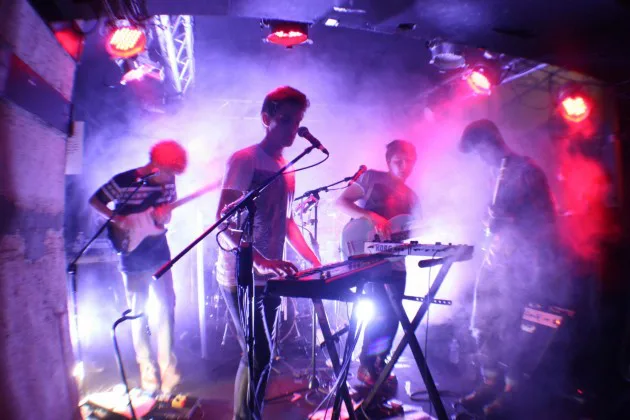
Ruby Cube concert at l'International (c) TomoWat via Adèle Bauville
Here’s a little story that illustrates the pitfalls of online voting. On June 30, 2012, a young Parisian band – Killtronik – were named winners of the final monthly InrocksLab competition. InrocksLab, run by the influential French culture magazine LesInrockuptibles, is a sort of year-long online battle of the bands, where two winners are chosen each month, one by the magazine and one by an online public vote.
The band Ruby Cube, who finished 500 votes behind, expressed reservations about the validity of the voting and requested an explanation from the magazine. Adèle Bauville, the band’s manager, explains their approach. :
During the competition we noticed an explosion in the number of likes on the Killtronik Facebook page. The number of fans went from 5,000 to 10,000 in just a few weeks. You can see on this public page that most of these likes originated in Dhaka, Bangladesh. Also, many of the votes were recorded between midnight and 6am. So we decided to contact the editors of Inrocks to inform them of our doubts.
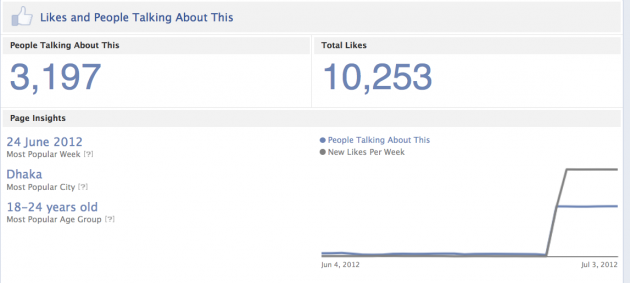
Graph of Killtronik's fans between June and July (Facebook screenshot)
The competition judges decided to validate Killtronik’s victory, in a strict enforcement of the rules. Contacted by email, Abigail Ainouz, the community manager of Inrocks explains further.
We are aware of the purchase of Facebook fans by Killtronik, but we don’t actually have any evidence as to whether this group’s likes on our platform (at a completely different url from their fan page) are also bought, and therefore fraudulent. We cannot disqualify a group without sufficient evidence.
Of course, buying Facebook likes or Twitter followers is not a crime. Some companies, such as Boostic in France, are specialists in the field, offering all manner of arrangements to improve one’s virtual influence. In the US, Freelancer’s service will buy you fans from India, Bangladesh and Pakistan. Nevertheless, the lack of transparency surrounding these companies gives rise to legitimate questions about the methods they use. While there’s nothing to prevent Bangladeshis from becoming groupies of an emerging French artist, the benefit of creating a community of fans of the group, thousands of miles apart, doesn’t seem clear.
Alfio Rizzo, Killtronik’s manager, mentions another practice used to promote independent artists on the web.
More than anything, we’re trying to create traffic and maximise our visibility. Our strategy revolves around intensive emailing, using our producer’s international network. It’s a technique widely used by the major labels.
All of which strikes this journalist as an unconvincing argument. The aim should be to assure transparency. The organisation of such springboards could be skewed by many factors and could call into question not only the rules but also the credibility of the organisers. It’s an implication that’s been considered by the InrocksLab jury, as Abigail Ainouz confirms.
This is the final selection of the season. We’ll have to modify our technical tools for the future so that we can trace these Facebook links, and thus be able to know the origin and frequency of their use.
One week after publication of the results, Killtronik
to withdraw from the competition, and were disqualified. The Inrocks jury then awarded victory to Ruby Cube.If you too live in Bangladesh and you enjoyed this article, don’t hesitate to like it.
Image Credits: Photo of Ruby Cube at l’International by Tomo Wat (c), with the kind consent of Adèle Bauville
💬 Discussion
No comments yet. Be the first to comment!