Academics & researchers are harnessing our human love of games to crowdsource vast and complex tasks. And when the capacity of the human brain is combined with digital computing power, the possibilities appear truly staggering.
Our weekly review of data journalism on the web, with the usual helping of breathtaking visualizations, inspiring citizen projects and pretty, pretty colours. Carpe Data!
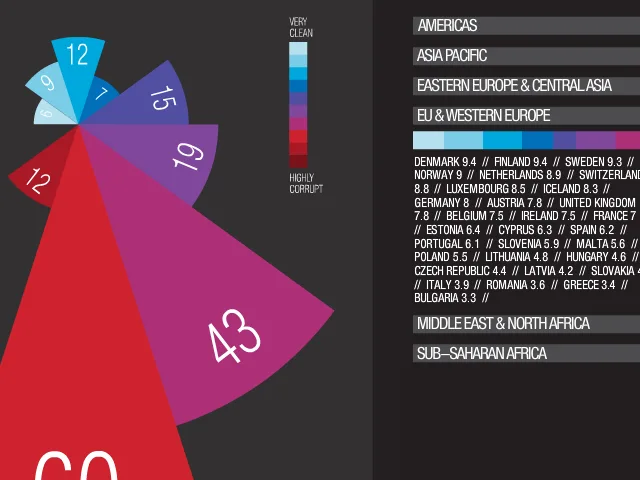
The corruption in our world, the supremacy of ants and a little Chopin to set you at ease. All that and more in this week’s super soaraway The Week In Data, brought to you by OWNI’s dedicated data team.
In this week’s data round-up brought to you by OWNI’s data journalists: data meets art, surveys, DIY, the Olympic Games and women’s safety.
On a farm in the midwest of America a group of scientists, engineers, farmers and DIY enthusiasts are creating the Global Village Construction Set – an open source, low cost, ecofriendly “toolkit for civilisation”.
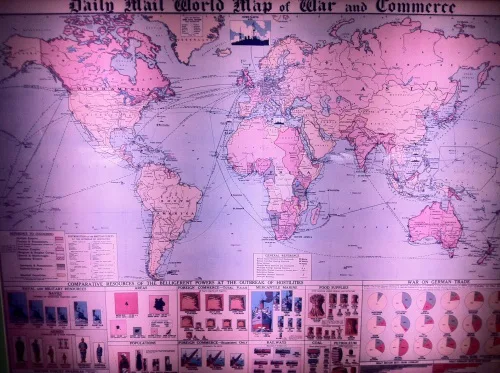
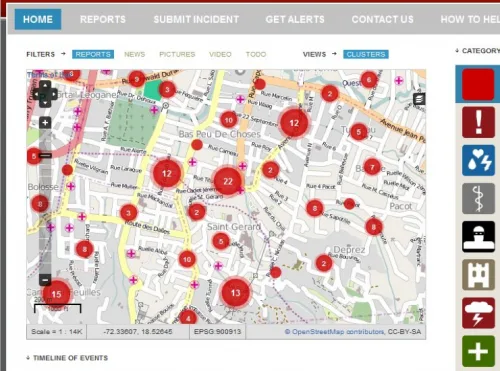
Would public opinion during the world wars have differed had live crowdsourced crisis maps existed?
On October 23, Tunisia has a date with history: the election of its Constituent Assembly. In Tunis, OWNI met avant-garde network democracy and innovative participatory politics.
During the Russian forest fires citizens used the Ushahidi platform to create a “Help Map” during the forest fires, actually taking over functions of the state. Are there deeper political implications behind citizen-based crowdsourcing initiatives?
Dave Munger test-drives two newly unveiled tools for understanding vast sets of cultural and scientific data.
One of the main concerns about crowdsourced crisis information is that the data is “useless” for any serious kind of statistical analysis. But new findings prove otherwise.
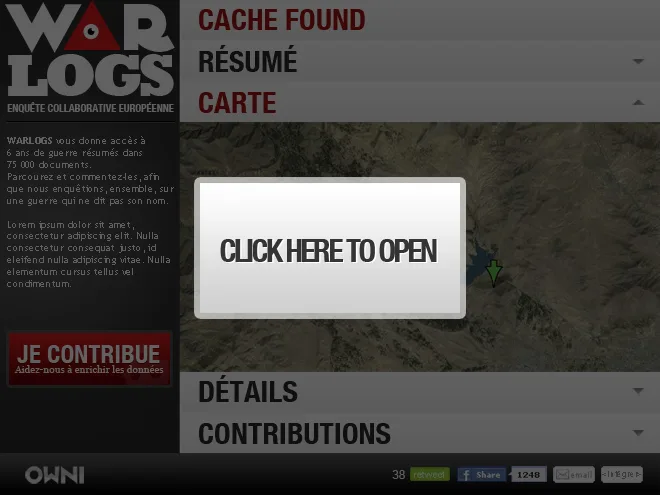
Given the huge amount of data made available by Wikileaks, we developed an application allowing you to review the files potentially revealing information about coalition forces. We need you !