
My grandmother once told me: “Be careful of people who claim they want to protect you. They probably want to take you down or, even worse, they are trying to stitch you up”. My grandmother left school after junior high, and worked in the textile industry for her entire life. I doubt she’ll ever get the chance to do an online search. Nevertheless, she possesses the kind of wisdom that could really help many of us to unravel the tangle of pronounced freedoms and subtle censorship the internet is fast becoming.
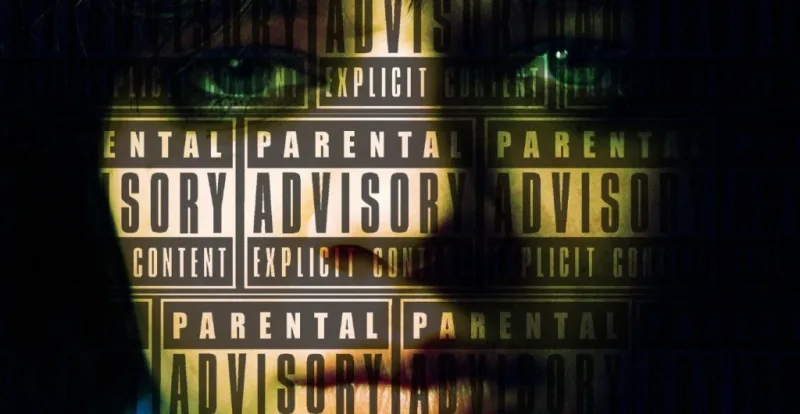
In the past few weeks, Google and Apple have introduced a couple of new ideas, each with their own tools ostensibly for the “protection” of minors. Google’s new Instant Search, for example, has proven to be an instant hit, its primary feature being to display your search results as you type. However, beware: the moment you start typing anything remotely improper (the word “Escort” is already too raunchy), you’ll get a pure and unsullied blank page instead of your preview.
There are hundreds of “bad” words Google Instant doesn’t like, and there’s a website (2600.com) collecting them all for posterity. The young or unwary web surfer is prevented from running into such dangerous previews as Lesbian (but not Gay), cocaine (but not heroin), swastika (but not Nazism), Kama sutra, ejaculation, fellatio etc.
And if you happen to be a fan of Philip K. Dick – sorry, no preview for you.
Last week, the puritan revival which spurred Google’s censors also emerged in the form of a new patent from Apple. The patent is filed under the title “Text-based communication control for personal communication devices”. Apple claims it will help parents to clean up “dangerous” text from their children’s SMS. It ultimately allows a smartphone user, or a designated administrator, to control the text content of incoming and outgoing messages.
Parental associations and some child protection websites praised the patent approval, explaining that it will help tackle the growing problem of ‘sexting’ (a neologism that refers to the exchange of sexually explicit material through the internet and particularly phones) and its connected potential for child abuse. However, according to some – notably, John C. Dvorak – the patent’s parental-control feature is nothing but a window dressing that hides a subtle tool for political censorship.
“This is a classic example of something looking like one thing and being something else altogether. And the entire tech world is stupidly missing the point.” explains Dvorak, columnist for PcMag.
“This patent is not about sexting; it’s about political speech. Apple wants its phone in Iran, China, Saudi Arabia, and other parts of the world where political dissent is a crime. Over the years, it has become apparent that the mobile phone is a tool for revolutionaries. This was proven with the Iranian “Green” riots of 2009, but began with a series of riots all over the world through the last decade.”
Actually, the term “sexting” is never used in the patent – and in fact, parental-control is only one potential use. It’s not difficult to imagine that such a feature could be used to ban mention of any unsuitable contents (or people).
The collection of vintage advertisements provided by BoredPanda bear great witness to how the world of marketing (and consequently the Web) is politically correct now more than ever. And if on one side I’m totally happy that I no longer am forced to look at saucy pictures of little girls, I’m also aware that, in a certain way, censorship is easier (and more accepted) today than twenty years ago.

Let’s assume, though, that behind Apple’s patent lies a genuine intention to prevent teens from hazardous messages, or to provide parents with a tool to dig out bad words from their children’s conversations; it remains a fact that this application is more a tool of censorship than a tool of education.
To be frank, the real danger of sexting is not that two fifteen year old kids could exchange hardcore messages. This happens now as it will always happen in the future, with or without Apple’s consent. The real danger of sexting lies in images and video, and the ease with which these files – even if originally recorded by the kids in jest – could actually be spread throughout the net, manipulated (say, for bullying) and, at worst, exploited by adults to trick or lure other minors. In this way the flaw in the patent is apparent even in the title: it only applies, and can only apply, to text.
Child sexual abuse through sexting is a real problem, and there’s only one way to fight it: to take responsibility, to educate, and to inform.
A kid who is ignorant of the perils hiding in the Web is likely to frivolously squander their privacy and that of their contacts by posting information with little regard for safety. They are more prone to accept friend requests from total strangers, and ultimately their naivety of the dangers can lead to them “innocently” posting such revealing pictures on their own publicly accessible blogs. The solution is not asking for more automated stewardship, but for more information, starting from schools.

A proof of this is the fact that a piece of research recently completed by Ipsos for the charitable Save the Children fund has revealed that Italy, the country in which I live, is where young people use the internet with the least precautions. And if 76 kids out of 100 actually exchange personal images and video with strangers, if 73 of 100 young persons are accepting friend requests from strangers, and if 23 of them have no problem with giving away their home address to anyone, this is not because of a lack of an application that blocked them. It’s because they are not informed and, moreover, awake to the risks connected with the Web.
Luckily, while Apple contrives more coercive methods to avert the spectre of sex from children’s smartphones, while Google dislodges the most malicious terms from its instantaneous previews, some schools are launching media-education classes, warning towards problems like sexting. Their final goal is to educate not only young web-surfers, but especially their concerned parents.
——
Photo Credits: Flickr CC Alicakes*, lindley rebecca, and v i p e z.
💬 Discussion
No comments yet. Be the first to comment!