

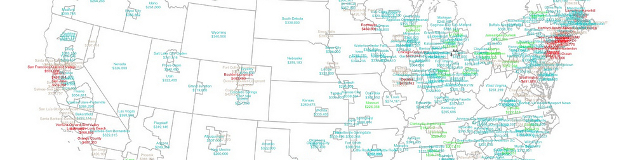
The approach of designer Kevin Quealy is perfect. Before, During and After is a detailed look at the process of two New York Times’ journalists creating a “data map”. From Alicia DeSantis’ initial sketch using the R1 software to the gradual graphic design updates, it’s a glimpse at the collaboration (between journalists, designers, datalovers) that reminds us a little of daily life here at OWNI



Still on track
Another week, another wonderful discovery from Matthew Somerville. Live train map for the London Underground will have any R&D gurus and other open data evangelists turning pale with fear and envy. Based on the London Transport API, this interactive map allows the user to view in real-time the location of all underground trains and anticipate their arrival at the station of their choice. It’s simple, brilliant, effective, and not Matthew’s first contribution to the welfare of his fellow citizens – he’s also involved in famous data projects such as They Work For You, Fix My Street and the national scale Live Train Map.

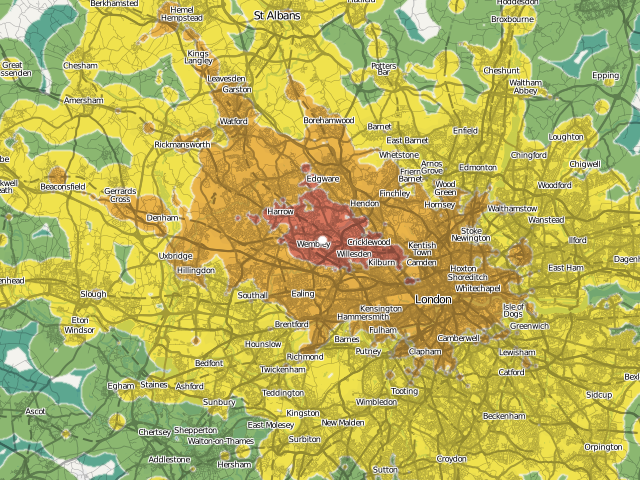
Matthew is also part of the team of developers behind Travel Time Maps. The principle here is simple and the result compelling: produce isothermal maps and start a business by selling these visualizations to the real estate, tourism or public service sectors. The maps can be generated automatically by anyone – just provide the zip code of the neighborhood that will provide the starting point, the maximum travel time to be represented, the time of departure or of arrival and £15 to £25 per map.
Hot or Not
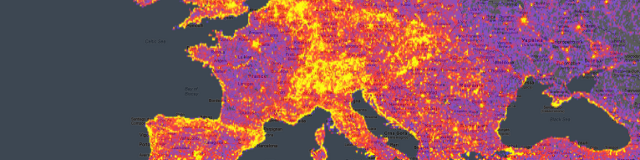
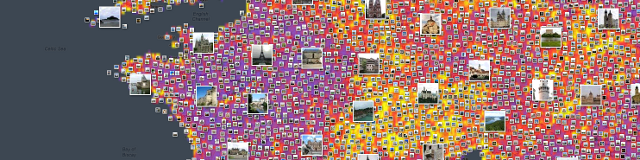
Sightseeing Heatmaps is an interactive mashup of Panoramio and Foursquare where the varying popularity of different location in the world are visualized using “heat zones”. The more yellow in a particular zone, the more geotagged photos of that spot there are on the old Google.

Mapping the crisis
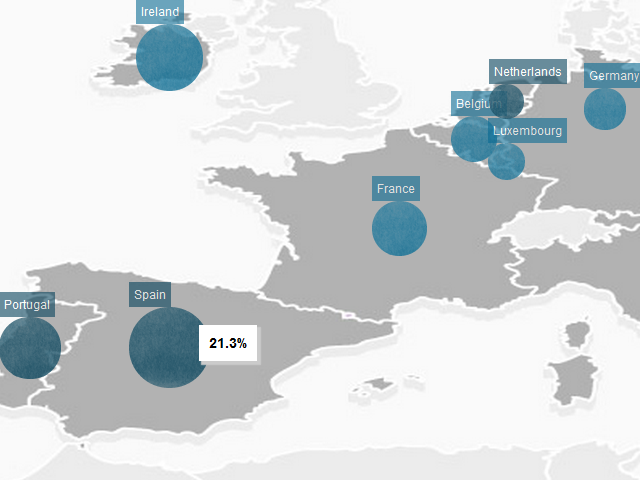
Also worth a look this week is the (HTML5) application Eurozone crisis: How the figures stack up. Not just because it involves a CNN map of Europe that doesn’t have any mistakes in it, but also because it’s simple and informative. It’s a visualization of the rate of unemployment, youth unemployment, GDP, growth, debt as a percentage of GDP – all in map.
Twitter Island
To finish with data mapping this week, it was hard to miss London’s Twitter Island. A joyous confluence of several technologies (Twitter API with ArcMap, 3DMax, Lumion) harnessed for the good of data visualization, the video comes from the fertile imaginations at the Centre for Advanced Spatial Analysis & Visualization, part of University College London. Designed by Fabian Neuhaus and based on data collected by Steven Gray, this troubling phallic virtual island represents the city of London deformed according to the proportion of Twitter users posting messages from the same place. We’re not entirely sure of the value of the experience, but that’s not to discourage the bright and curious minds who are trying to improve science and art.
Drag and drop democracy
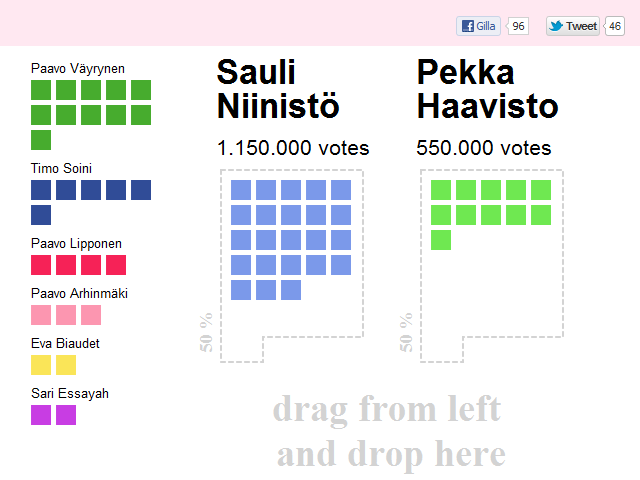
And finally…while the presidential campaign in France is in full swing, we’ve been seduced this week by the simplicity of the application The Presidential Puzzle from the now unavoidable Finnish “dataist” Jenn Finnas. The principle is crystal clear: distribute amongst the two finalists the votes of the candidates eliminated in the first round of voting, and predict (or maybe guess, depending on your knowledge of Finnish politics) who will replace the popular President Tarja Halonen.
Have a great data-week!
Find previous editions of The Week In Data!
Follow OWNI’s elite data squadron on Twitter: @pdatha, @gregoirenormand, @mariecoussin, @juliengoetz & @nicolaspatte
💬 Discussion
No comments yet. Be the first to comment!