

Lovers of data, please be upstanding for the insane Graphic World project by David Mc Candless and the Financial Times.
A train station, some data, talent, and voila – enough to give you shivers. To take the figures out from our screens, and put them on view right in the heart of a place as busy as Grand Central Station in New York, surprising the 750,000 passengers who pass through it every day – it’s all quite a feat. Especially when you throw in the ability to browse the data IRL, using a simple interface – their feet.
The result is equal to the challenge, a series of 3D isometric animations covering three separate themes: the role of the US economy in the world, the importance of the mobile phone industry and the positive numbers at the heart of the current crisis.
The site that relays the operation is simple and effective; content accessible at a click, nice CSS layout, contextualised videos and links to their Facebook discussion thread. All in all, the campaign – which puts data at the heart of the analysis – is a success. With one drawback: its crusading objective draped in the Stars and Stripes…
The US is still the world’s pre-eminent economic superpower – but to stay on top and thrive in the global arena, an in-depth understanding of the global marketplace is critical to the American business community.
Data that you can touch
Sian Ching, a designer and graphic artist based in Singapore, is a DIY enthusiast. With templates, scissors, glue and some carefully chosen colored sheets of paper, in a few hours she managed to transform some data tables into a wonderful series of physical infographics.
She worked on three data sets: the distribution of blood groups among blood donors in Singapore, reserves of the three main energy sources in the world and a comparison of five causes of death (the AIDS virus, malaria, suicide, alcohol and road accidents).

The project’s goal is twofold: to highlight the essential role of pattern (and repetition) in any graphic work, and to provide inspiration for all those interested in the subject.
Do it Yourself!
If you’re not much cop with the paper-scissors-glue set, but do feel moved by the idea of getting involved, then let’s talk “tools”. Last week the Guardian’s datablog published a very useful article for all (data-) journalists and data visualization fans that fancy getting their hands dirty.
Generous man that he is, Simon Rogers has listed the online services most used by his teams. Google Fusion Tables, Tableau, Many Eyes, the basics are all there with explanations on “why and how” for each. It’s an article worth always keeping to hand, because the more of us who use these tools, then the more new tools that’ll appear, and so the more possibilities that will open up for everyone.
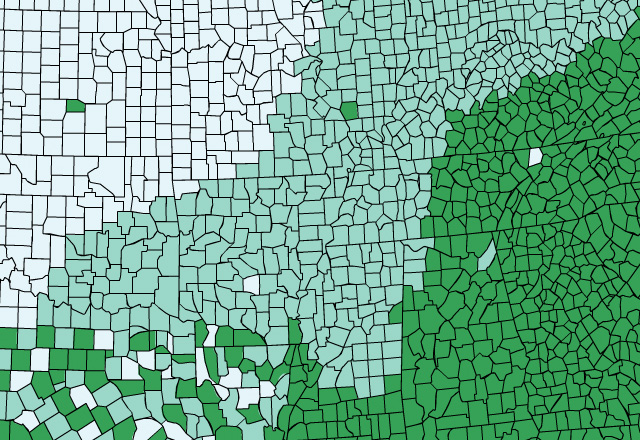
We’ll make our own modest contribution by suggesting a new tool for creating timelines, the imaginatively entitled Timeline. This project, born out of the Knight News Innovation Lab, reminds us graphically of a more streamlined and efficient Dipity, with an innovative principle.
No need to create an account, no GUI. You simply take the various script files from GitHub, edit the .json file containing the data you want to display on the timeline, and dump everything on your server (or in a public Dropbox folder). Then you just have to invoke the script on one of your pages to display the result.
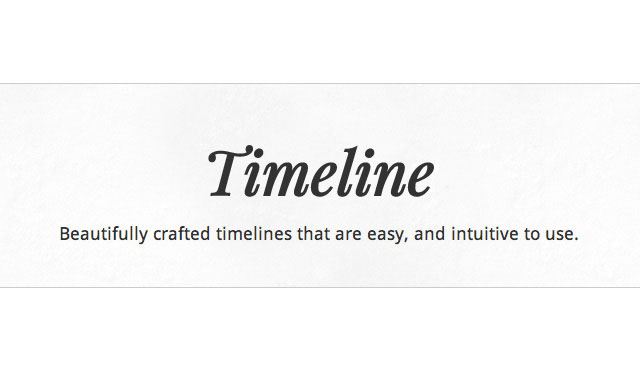
Sure, you’ll need to get your hands dirty with the code, but it’s not as complicated as it looks and the functions that Timeline offers are really interesting: integration of multiple sources (Twitter, YouTube, Vimeo, Soundcloud, Google Maps, Flickr), full screen display, integrating data from a Google Docs spreadsheet, and display on mobile devices (smartphones, tablets including Apple).
The final thing we really love about this project: it’s open source. One to watch then, because new features are certain to appear very soon, making the tool even better.
Ebb and flow
One of the fascinating things about working with data is managing to make visible (and legible) information which originally wasn’t. It’s even more when they get to do this work on data around us without our knowing it.
That’s precisely the subject of the latest personal project of Fernanda Viégas and Martin Wattenberg. As the heads of the “Big Picture” visualisation research group, funded by Google, in their free time they had some fun visualising the winds that blow across America. In real time, of course.
The project, entitled Wind Map, is visually fascinating. Its principle is so simple, without being obvious, that there’s really not much that needs to be said beyond its title. It’s artfully constructed using today’s tools. The data, from the National Digital Forecast Database, is public and has been available for a long time.
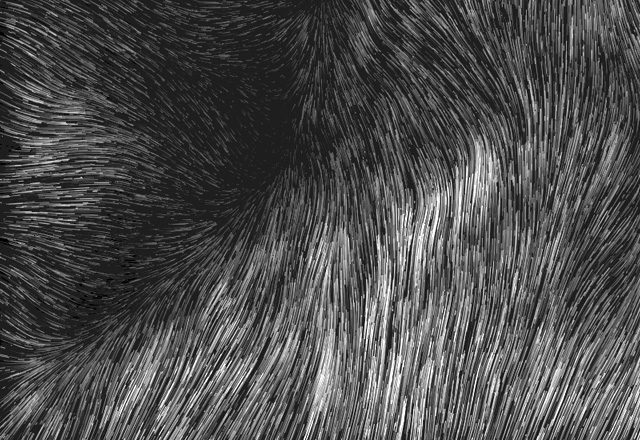
On a similar principle, but with slightly greater means, NASA have posted a video on their Flickr account entitled Perpetual Ocean which visualises the ocean currents. The scientific visualization home studio has compiled an enormous flood of data produced by the ECCO2 project to produce the 20-minute film visualising these ebbs and flows between June 2005 and December 2007.
Again, the result is quite hypnotic.
Watching the video on a loop, it got us thinking of Vincent’s Starry Night, perhaps unknowingly one of the first data journalists.
Until next week then, and remember, the data is here, all around you.
Find previous editions of The Week In Data on Owni.eu
Follow OWNI’s elite data squadron on Twitter: @pdatha, @gregoirenormand, @mariecoussin, @juliengoetz & @nicolaspatte
💬 Discussion
No comments yet. Be the first to comment!